Social Media For Musicians A Complete Growth Guide
social media for musicians
Welcome offer — 56% OFF


Master instagram and music copyright with this entertaining guide to licensing, fair use, and compliance for creators and brands.
Before you hit “Share” on that catchy audio in your Instagram Reels or Stories, remember that Instagram and music copyright rests on two pillars: the in-app music library for personal clips and extra licenses for any paid or branded material. Skip the fine print, and you could end up with muted videos or, worse, a takedown notice.
Think of Instagram’s music policy as a three-step checklist before sharing:
Personal Clips: All set with the in-app library—no fees attached. Sponsored Posts: You’ll need a commercial sync license straight from the rights holder. Fair-Use Excerpts: Only brief or creatively transformed snippets qualify.
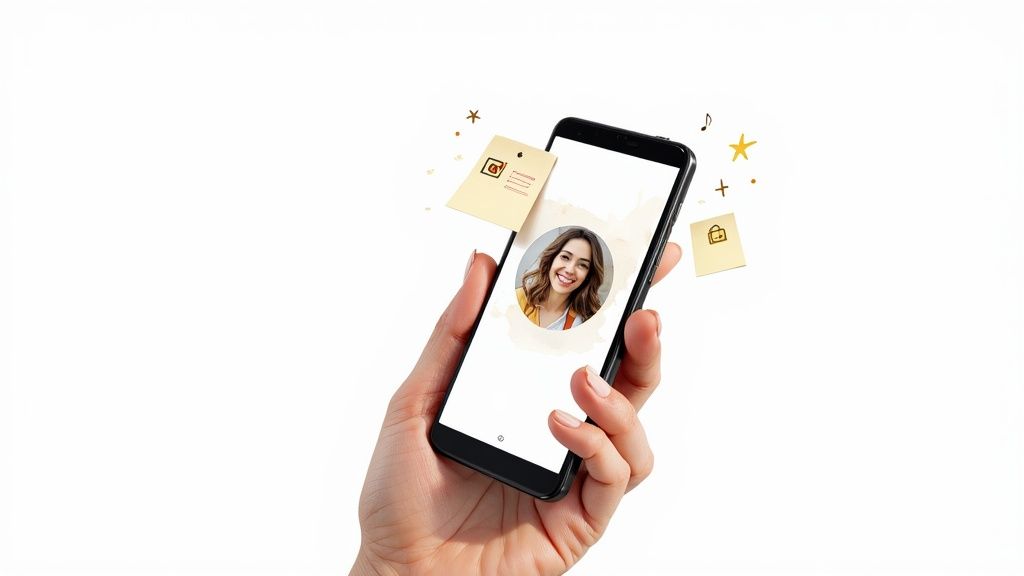
This snapshot shows Instagram’s permissions matrix for Stories, Reels, and Live. A quick glance tells you if your track is covered under the standard terms.
Key Takeaway: Always pair your content type with the correct license before posting.
Follow these simple rules:
Do use Instagram’s native audio picker for personal Reels. Don’t assume fair use lets you run full-length songs. Do lock in a commercial sync license for any paid collaboration.
Below is a quick reference to help you decide if in-app music cuts it or if you must chase down additional rights.
| Use Case | License Required | Instagram Library Coverage |
|---|---|---|
| Personal Story | No additional license | Full |
| Branded Content | Commercial sync license | Limited |
| In-app Reels | Included in platform agreement | Full for non-commercial use |
This table gives you a one-glance rundown. Save it, share it, and keep those tunes rolling smoothly.
With this cheat sheet in hand, you’ll minimize clearance headaches and keep the focus on creativity.
Map out your audio choices well before you press record to avoid last-minute scrambles.
Note your content goals alongside licensing needs. Archive all permissions, credits, and timestamps. Double-check the in-app library before every post. Store licenses and documents in an easily searchable folder.
You might be interested in SendFame’s AI Music Generator for crafting original tracks without licensing headaches.
For the full legal rundown, visit Instagram’s music licensing page and stay ahead of any policy updates.
Dropping a soundtrack under your next Reel might feel like a small tweak, but you’re actually stepping into a carefully choreographed dance of permissions. Get it right, and your clip thrives. Slip up, and you could end up with a muted video or even a takedown notice.
Every song you love breaks down into two main copyright pieces. One covers the musical composition—the melody and lyrics crafted by songwriters and publishers. The other sits with the master recording, owned by the artist and their label.
In simple terms, sync rights let you pair a track with your visuals. Master use rights grant you the actual sound recording. Miss either, and you’re shooting in the dark.
Imagine you’re at a summer movie screening.
Sync rights are like renting a brief scene to play alongside your film project. Master use rights feel more like buying the entire DVD so you can watch—or remix—it.
Under the hood, several players hold these tickets:
Recording Artist Rights let performers decide when and where their music debuts. Songwriter Rights ensure the people behind the melody get credit and cash each time it’s heard. Publisher Rights manage who can license the song for ads, overlays, or other uses.
Up next, we’ll see how these pieces fit into Instagram’s bite-sized video world.
Think of rights holders as the bouncers and box-office managers of the music world. They negotiate licensing deals or hand out blanket agreements that platforms like Instagram embed into their in-app libraries.
Lately, social-video licensing has exploded. Reels and Stories now lean heavily on rock-solid sync and master deals behind the scenes to keep everyone playing by the rules.
This snapshot from Wikipedia highlights the major copyright categories in plain English—no law degree required.
Short clips flipped the script on how music gets used online. Instead of full tracks, creators chop songs into catchy hooks.
Rapid sharing means a huge appetite for short-form sync licenses. Millions of uploads demand scalable master-use agreements. Brand deals and monetized posts often fall outside free-library perks.
All of these shifts helped drive the broader copyright music market to roughly $50 billion in 2025. And with a projected 10% CAGR, we’re on track to reach $130 billion by 2033. Learn more about these trends in this report.
Every sync fee and master-use payment fuels future recordings and songwriting sessions. Without a transparent money trail, artists lose out—and creators risk silenced posts or worse, legal headaches.
“Clear licensing protects artists, maintains platform trust, and fuels future music creation.”
Next, we’ll peel back the layers of Instagram’s policy mechanics so you can post music-powered content without fear.
Instagram’s Rights Manager is like a musical radar—scanning uploads for familiar audio fingerprints. When it spots an unlicensed track, it acts fast.
Audio Fingerprinting catches copyrighted tunes as you upload. Instant Muting can happen within seconds if something’s off. Removal Notices prompt you to dispute or secure a proper sync license.
Think of it like travel insurance: better to have the coverage sorted before you hit an unexpected detour.
Music on Instagram hinges on two vital permissions:
Sync Rights—pairing audio with your visuals. Master Rights—using the artist’s actual recording.
Master these concepts, and you’ll navigate Instagram’s music-copyright maze with confidence. With the right licenses in hand, silent videos will be a thing of the past.
Finding the right license for your Instagram content can feel like choosing between renting a movie, buying a DVD, or streaming on demand. Each option comes with its own price tag, usage rules, and paperwork.
Think of the in-app music library as a public jukebox—everyone shares the same playlist. Direct deals with labels are more like a private listening session with VIP perks. And independent catalogs feel like browsing an indie record store.
Instagram’s official audio picker gives you instant access to thousands of tracks cleared under broad agreements. This route works brilliantly for personal Stories and non-commercial Reels without extra fees.
Immediate access with no negotiation. Limited commercial use and potential track removals. Automated reporting through Instagram’s analytics.
Brands running paid promotions usually need an extra stamp of approval beyond the in-app tunes.
Going straight to a record label means you secure the widest rights—often with regional exclusivity. It’s more like commissioning a bespoke score than picking from a menu. Expect sync and master use fees and a multi-step negotiation:
Identify songwriters and rights owners. Submit a detailed license request. Negotiate terms and pricing. Sign the agreement and pay fees.
When budgets are tight, indie labels can offer friendlier rates and flexible terms.
Independent artists and small labels publish catalogs via specialized platforms. It feels a bit like picking singles off a digital shelf.
You support creators directly and enjoy straightforward reporting. Library size is smaller and license terms can vary.
Here’s a snapshot of Meta’s licensing portal, showing different license categories and price tiers.
Filters let you drill down by use case and view estimated fees in seconds.
Think of these as travel agents for music rights: they bundle multiple permissions into one easy package. Most platforms offer subscription tiers or single-track deals with clear usage limits.
Browse a curated catalog. Select your license terms. Download the track with embedded metadata. Access support if disputes arise.
This path balances legal safety, speed, and predictable costs.
Below is a quick overview to help you weigh each route before you commit.
| Pathway | Scope | Cost | Processing Time |
|---|---|---|---|
| In-App Library | Personal posts, non-commercial Reels | Free | Instant |
| Direct Label Licensing | Full commercial use, exclusivity | Varies by deal | 4–12 weeks |
| Independent Catalogs | Varies by artist/label | Low to mid-range | 1–4 weeks |
| Third-Party Services | Subscription or per-track coverage | $50–$300/month | 1–2 days |
Use this table to align your project timeline and budget with the right licensing path.
Your content’s purpose often dictates the best fit. Personal Stories can lean on the free library, but brand campaigns usually require deeper coverage—either direct label deals or third-party solutions.
Budget Ranges: Free to premium tiers. Rights Depth: Basics versus exclusive privileges. Approval Speed: Instant to several weeks. Support Level: DIY analytics or hands-on dispute resolution.
Plotting your calendar around these estimates will save you from a last-minute scramble.
In-App Library: Instant Access Third-Party Services: 1–2 Days Independent Catalogs: 1–4 Weeks Direct Label Deals: 4–12 Weeks
A fitness apparel brand needed a trending track for a holiday Reels series. They weighed a $150 subscription against a $2,000 direct license.
Turnaround: Immediate vs. 8-week negotiation. Budget: The $150 plan offered massive savings. Outcome: Zero takedowns and a seamless launch.
This case proves timing and spend should guide your licensing choice.
Lower-cost licenses often limit where and how long you can use a song. Premium deals open more doors but might stretch your budget.
Starter Licenses: Region-locked, cost-effective. Advanced Licenses: Broader rights, higher fees. Custom Deals: Tailored terms, mid-range pricing.
Always review sample contracts and clarify terms before signing.
Match license scope to your content goals. Plan timelines early to avoid last-minute stress. Balance cost against the depth of rights you need.
Mid-2020s saw major labels secure platform-wide agreements that let Instagram deliver licensed recordings for Reels and Stories. Yet brands still need their own commercial licenses to avoid takedowns. Learn more about these platform-wide deals on MidiA Research.
You might be interested in exploring distribution tools that simplify music licensing for independent releases. Learn more about independent music distribution in our article on Music Distribution Tools for Independent Artists.
Fair use can feel like a soft landing for creators experimenting with music. Yet, if you stretch it too far, your post might get muted—or vanish altogether.
You’ll need to juggle four key factors when music meets Instagram’s copyright rules:
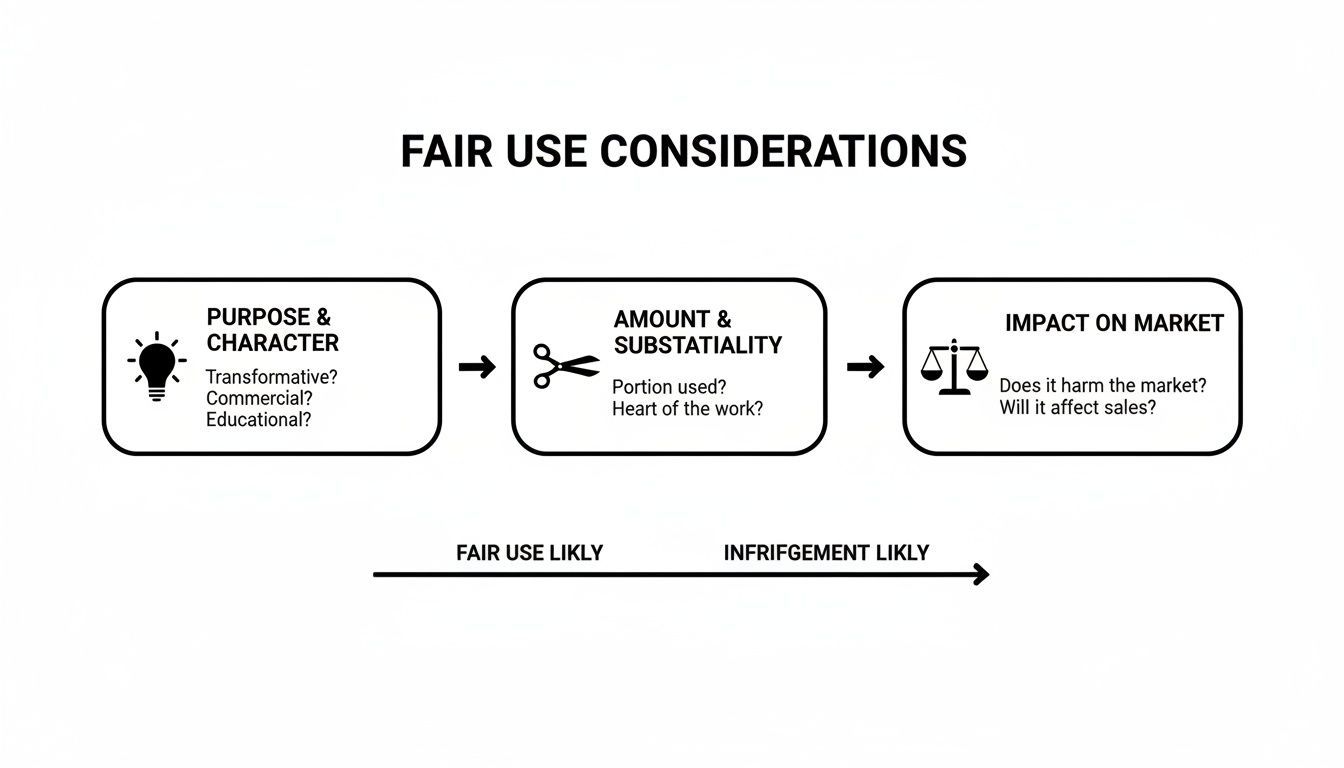
Purpose explores why you’re using the clip—say, commentary or a tutorial. Nature compares factual audio versus creative tracks. Amount checks how much you borrow (imagine a 15-second chorus snippet). Market Effect measures if your clip undercuts sales or streams.
Think of it like borrowing sugar from a neighbor: a dash is fine, but taking the whole bag sparks trouble. Educational mashups usually slide by, but full-song promos rarely clear the bar.
When you frame a clip as critique, commentary, or education, you win brownie points. Turn a song into a how-to or mix in your voiceover and you’ve transformed it.
On the flip side, a straight-up ad using the entire track is an instant red flag.
Key InsightThe more your project reshapes the original audio, the stronger your fair use argument.
Here’s where length and impact collide. A brief hook is easier to defend than an intact verse.
That U.S. Copyright Office graphic makes it clear: amount and market effect often decide close cases.
Brands usually run into trouble because their goal is promotion—not transformation.
Say a fashion label blasts a full song over a product demo—it’s likely to get pulled down. Instead, try:
Adding voiceover or on-screen captions to reshape the audio Sticking to clips under 15 seconds Crediting artists in captions to show good faith Testing with a small audience to see if they spot the difference
If you want a real-world example of remixing in action, check out the guide on how to make AI music covers.
| Defense Type | Risk Level |
|---|---|
| Fair Use | Medium to High |
| Formal License | Low |
Stories from the trenches prove context is king. Creators who narrate or visually edit their samples win more disputes.
Brands, meanwhile, often pony up sync fees just to avoid any question marks.
“When you add fresh commentary, you’re not just playing a clip—you’re telling a new story.”
Here’s a quick checklist to keep you safe:
Narrate over the sample to change its meaning Use minimal excerpts so your audience zeroes in on your point Credit original artists right in the caption Save timestamps and edit logs as evidence
Fair use is a crafty defense, but it’s case-by-case. If you’re ever in doubt, grabbing a formal license is the surest way to keep your posts live—and your creative juices flowing.
Feeling the pressure around Instagram’s music rules? Relax. This checklist is like a backstage bouncer for your content—keeping out unauthorized tunes before they even reach your feed.
Think of each tip as a security lane at the airport: quick scans to spot trouble before it triggers a takedown.
Pre-Posting Audits: Run through your audio files, captions, and permissions with a fine-tooth comb. License Selection: Decide between an in-app license or a custom sync deal that fits your campaign’s budget. Artist Crediting: Drop the proper artist name, track title, and label info right in your caption. Rights Manager Monitoring: Leverage Instagram’s dashboard to flag and sort any audio disputes in real time.
First, sniff out potential red flags with a thorough audit. Next, map out which license fits, then tag and credit artists like a pro. Finally, let Rights Manager keep watch once you’ve hit publish.
Before you schedule anything, treat your project like a crime scene. Check every beat and melody against your internal list and Instagram’s official music library terms.
Document every permission slip and email sign-off. This becomes your compliance log—a sort of detective’s case file.
Identify tracks that might have copyright. Verify if they’re covered by Instagram’s in-app license. Record any direct deals or third-party agreements (filename, date, scope). Stash all documents in a single, well-labeled compliance folder.
A bulletproof audit slashes your risk of surprise takedowns. Plus, if a dispute ever pops up, you can pull proof in seconds.
Picking the right license is like choosing between economy, business, or first class. Each comes with different perks, costs, and baggage policies.
In-App Library: Access thousands of pre-cleared tracks—ideal for personal or small-scale posts. Commercial Sync: Negotiate one-on-one with rights holders for big-brand campaigns. Third-Party Services: Subscribe to platforms that bundle multiple clearances into a single package.
Weigh the price, coverage limits, and turnaround time. Remember: brands often need deeper rights than hobbyists.
Imagine sending a thank-you card after borrowing a guitar. Crediting artists is that thank-you card for tracks you didn’t write.
List artist name, song title, and label in your caption for full transparency. Add trademark symbols if the license specifically requires them. Tag official artist or label profiles to boost engagement and credibility. Archive every credit record alongside your license docs for future audits.
This respect-building habit keeps both rights holders and your followers happy.
Instagram’s Rights Manager is your personal guard dog—it barks the moment unlicensed audio tries to sneak in.
Give it a spin and you’ll see match confidence scores, dispute options, and download-ready usage reports. All of this feeds into a complete audit trail.
Filtering by confidence level helps you zero in on real issues without drowning in false alarms. In other words, you’re always two steps ahead of a copyright claim.
Think of your licenses and artist releases as VIP passes. Keep them in one place—neatly dated and backed up—so you never fumble for proof.
Stamp each agreement with its receipt date to track validity windows. Organize folders by campaign name, date, and rights owner. Mirror your main compliance folder on cloud storage plus a local drive.
Good filing habits cut response times when platforms or rights holders come knocking.
Learn more about AI song creation in our feature on SendFame’s AI Song Creator for crafting custom tracks without licensing headaches.
With these steps in your toolkit, you’ll breeze past every compliance roadblock before you even hit “Publish.”
Right before you queue up a post, run this final scan—think of it as your last-minute baggage check.
Title Tags: Verify artist and track names match your license. Clip Duration: Keep your snippets within approved timeframes. License Validity: Confirm none of your deals have expired. Rights Manager: Look for any fresh flags in the last 24 hours.
These four mini-checks take under a minute and can save you hours of follow-up later.
Final Takeaway Run your compliance checklist on every post to keep music flowing smoothly on Instagram.
Stay compliant.
Ever wondered why some branded videos on Instagram suddenly go silent? Let’s explore real-life tales of brands wrestling with music rights—and how a few missteps can turn viral moments into muted posts.
Industry audits of tens of thousands of brand videos show that sectors like athletic wear and alcoholic beverages lean on music in up to 94% of their clips. And notably, they split their soundtrack choices almost evenly between independent catalogs and major-label rosters. For the full rundown, check out these industry audit insights.
Athletic wear ads riding trending tracks—and facing sudden mutes. Alcohol brands rushing to clear last-minute licenses to dodge take-down notices. Lifestyle influencers mixing indie and big-label music for that signature vibe.
A top sportswear brand dropped a high-energy promo with a hit anthem—only to see it go silent within hours. Panicked, the marketing team scrambled for a sync license at the eleventh hour, shelling out over $5,000 just to restore the sound.
“Quick clearances can save six figures in ad spend by avoiding silent posts.”
Beverage giants aren’t immune, either. Several were hit with takedowns after using full tracks in paid ads. Rather than drag through court, one company quietly settled for a confidential amount and moved on.
To keep your campaigns humming:
Negotiate expedited sync licenses when deadlines loom. Budget for emergency clearance fees. Track your audio picks across indie and major-label catalogs.
This snapshot underscores how athletic wear and beverage brands top the charts in music usage—often to amplify emotional impact.
Savvy marketers flip music clearance into a brand strength. By showcasing licensed tracks, they not only avoid takedowns but also earn genuine trust.
Plan your licensing timeline alongside campaign milestones. Call out your music credits in captions to educate followers. Tap independent artists for fresh, flexible soundscapes.
Treating compliance as a badge of authenticity can set you apart in a crowded feed.
Skipping small clearance fees can trigger big headaches—think court battles or muted videos. In one viral fiasco, a fitness influencer lost half a million views overnight when unlicensed audio got flagged.
“Proactive clearance can protect metrics and brand reputation before content goes live.”
Brands that build in last-minute clearances report a 40% drop in muting incidents and a 25% boost in engagement metrics. And here’s the sector breakdown:
| Industry Sector | Music Usage |
|---|---|
| Athletic Wear | 94% |
| Beverages | 88% |
Use these figures to tailor your clearance playbook by industry norms and exposure levels.
A craft brewery snagged a punchy indie track with a quick third-party license—and doubled its Instagram reach in just two weeks. Their secret?
Partnering with indie labels for flexible rates. Using Rights Manager insights to fine-tune audio choices. Publicly crediting artists to build community goodwill.
Conduct a targeted audio audit against your industry’s benchmarks. Lock in budgets for licensed tracks early in planning.
Real-world wins and mistakes in Instagram music copyright give you a roadmap. Lean on sector stats—like 94% usage in athletic wear—to craft a rights clearance strategy that fuels creativity rather than holding it back. Then, turn compliance into a marketing asset and watch your content truly resonate. Enjoy responsibly!
Wading into Instagram’s music copyright rules can feel like deciphering a secret code. Here, you’ll find straightforward answers, practical pointers, and links to the right resources—all updated to reflect Instagram’s 2025 policies.
Each answer is packed with real-world tips, so you can keep your content safe and sound:
Understanding what qualifies as infringement across Stories, Reels, and adsKnowing the scope of Instagram’s in-app library for personal vs. commercial postsSecuring commercial sync licenses for paid campaignsPerforming pre-post checks to avoid takedownsResource links to Instagram Rights Manager and Instagram Legal Pages
Any snippet of music not covered by Instagram’s native library can be flagged. That includes full songs, lengthy clips, or even those catchy 5-second hooks you keep looping.
The moment you upload, Instagram’s audio fingerprinting kicks in—comparing your track against a database of licensed and unlicensed content. If there’s a match, your video could be silenced or taken down without warning.
Key InsightUnauthorized use can mute your video in seconds, leaving your viewers wondering what happened.
Instagram’s built-in audio picker is a godsend for personal posts and simple Reels that won’t earn a dime. It’s free, it’s easy, and it’s perfect for everyday storytelling.
But don’t assume it covers everything. If you’re weaving music into branded content or any revenue-generating campaign, you’ll need more than the native tracks.
Confirm the library license covers your content type Check track availability in your region before posting Reserve high-risk or paid campaigns for formal sync agreements
License terms can shift depending on where your audience lives, so double-check before you hit publish.
When your project steps into commercial territory, you’ll need a proper sync license. That means talking directly to the rights holders—publishers, labels, or their representatives.
Research who owns the song (both sync and master rights). Request a quote detailing sync fees, master fees, territory, and duration. Nail down the agreement in writing, making usage terms crystal clear. Archive contracts and proof of payment for future audits.
For hassle-free, royalty-free options, consider services like Soundstripe or Artlist, which bundle sync and master rights in one neat package.
Think of a pre-post audit as your safety net. Before anything goes live, run through each audio element and cross-check it against your licenses.
Credit artists, add track metadata in captions, and tag official profilesUse Instagram Rights Manager to scan uploads for potential conflictsMonitor sudden drops in engagement—they often signal muted or removed audio
A little vigilance up front saves you from scrambling after a takedown notice.
SendFame is your AI-powered partner for crafting original, copyright-safe tracks—get started at https://sendfame.com
Create Epic

SendFame

Create Epic with SendFame!
Questions: info@sendfame.com