How to Grow YouTube Subscribers The Ultimate Playbook
how to grow youtube subscribers
Welcome offer — 56% OFF


Learn how to promote your music independently with a practical, step-by-step plan for release strategy, social media, PR, and content tools that build momentum.
Promoting your own music is all about grabbing the marketing reins yourself. You're the one building the buzz, getting your tracks out there, creating the content, and hitting up playlist curators. It's a hustle, for sure, but it puts you in the driver's seat, connecting you directly with your fans without a major label calling the shots.
Hitting "publish" on your distribution platform isn't the starting line. Think of it more like the victory lap after a race you've already won. The real grind—the work that makes or breaks a release—happens long before a single person hears a note. The old "post and pray" strategy is dead. Today, it’s all about building a tidal wave of anticipation.
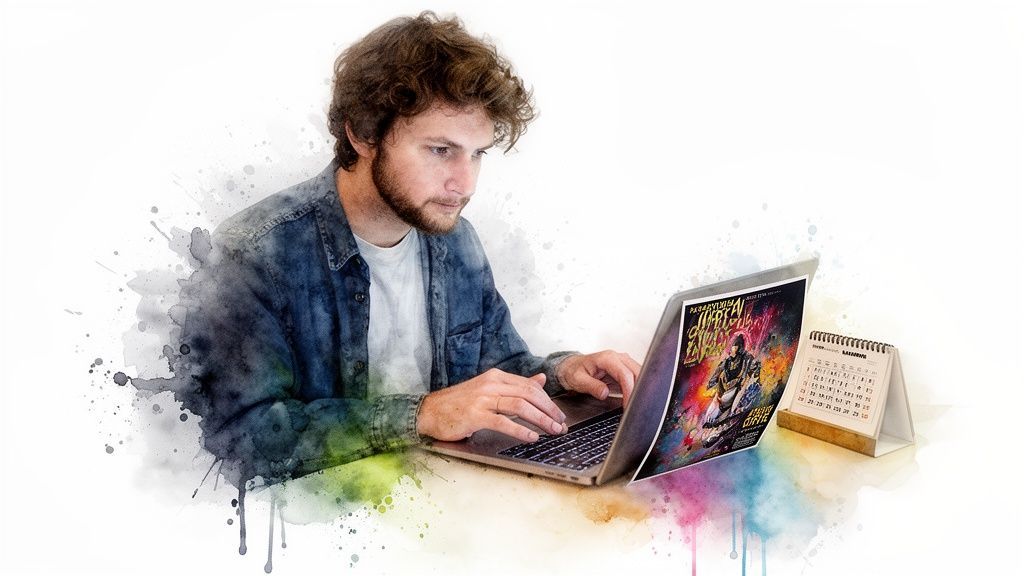
This all starts with getting your story straight and creating the assets to tell it. A professional electronic press kit (EPK) is absolutely non-negotiable. It's not just a musician's resume; it's the hook that gets bloggers, journalists, and playlist curators invested in your journey.
A killer pre-release campaign isn't about one magic bullet. It’s about a few key pieces working together to build momentum. Don't treat these as a checklist; see them as gears in your promotional engine.
The Compelling EPK: This thing needs to be your digital handshake. It should have high-resolution photos, a bio that actually tells a story, links to your best stuff (both released and unreleased), and any cool press or shoutouts you've gotten. Make it so good that it answers every question a media contact has before they even think to ask. A Realistic Timeline: Seriously, map everything out at least 30-60 days before you plan to release. Set hard deadlines for finishing the master, getting the artwork done, pitching to blogs, and scheduling all your social content. Artist burnout is a real thing, so create a schedule you can actually live with. High-Quality Visuals: We live in a visual world. Your cover art and promo photos are often the very first thing a potential fan sees. You don't need a major-label budget to look pro; there are plenty of tools that can help your indie project look like a top-tier campaign.
"Your pre-release period is your most valuable marketing window. It’s when you have the most leverage to create a story, build an audience of true fans, and prime the algorithms for your launch."
This plan breaks down the whole pre-release game into three core phases: getting your EPK ready, locking in your timeline, and then launching with a bang.
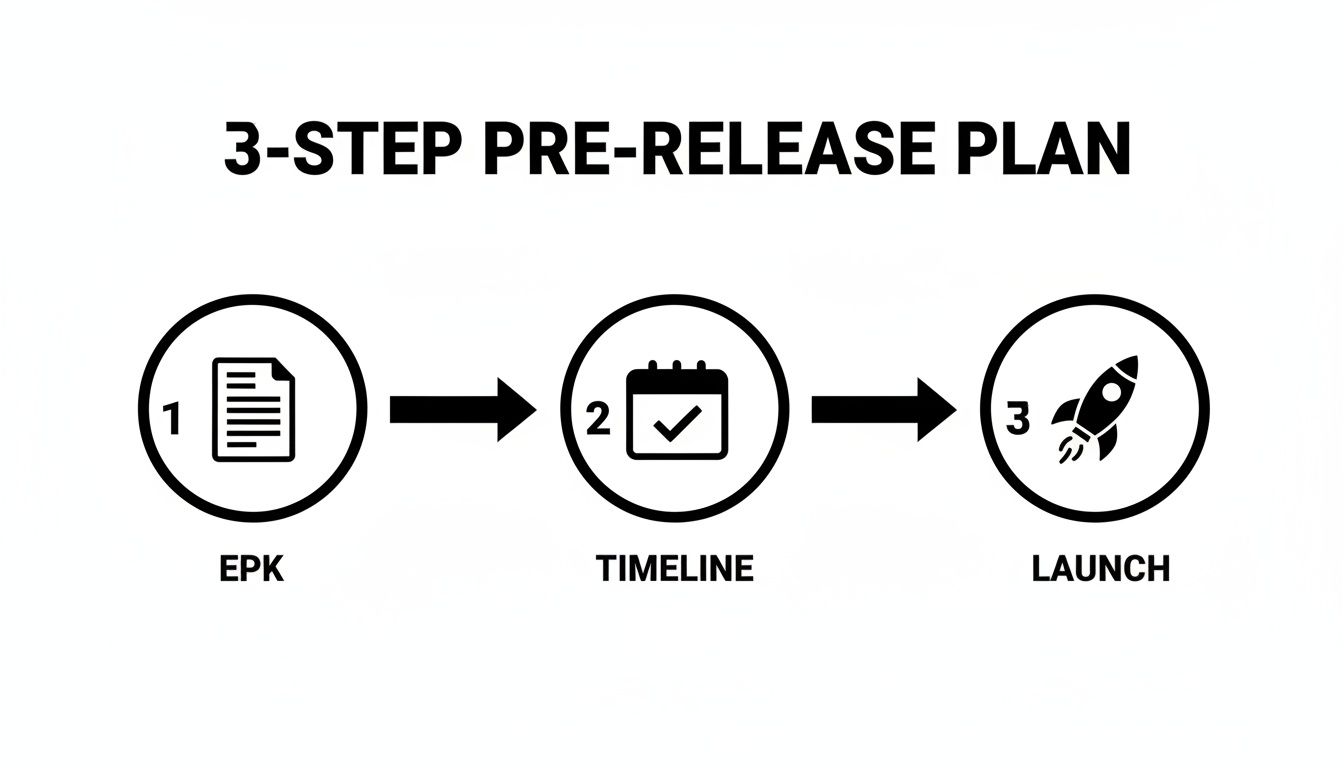
Each step feeds into the next, making sure you've got the assets, the plan, and the execution to crush it on release day.
The final 30 days are all about execution and cranking up the volume. Start teasing your audience with behind-the-scenes clips, short snippets of the track, and countdown posts. This is when you rally your superfans. Nothing connects you with your core audience like a direct line of communication, which is why mastering strategies for building a robust email list is a game-changer.
That direct line is your secret weapon. A single email to your list or a post in your private fan group can generate more day-one streams than a hundred half-hearted social media posts. The goal is to make your fans feel like they're part of the inner circle. For some fresh ideas on making your content impossible to ignore, check out these tips on https://sendfame.com/blog/how-to-create-viral-content.
By the time release day finally hits, your audience shouldn't be surprised—they should be impatiently waiting.
So, you’ve poured your heart and soul into a track. It’s mixed, mastered, and ready to go. Now what?
Uploading your masterpiece to Spotify is one thing, but getting actual human beings to press play? That’s the real boss battle. The whole world of digital distribution is your gateway to listeners, but let's be honest, choosing the right path can feel like you're fumbling around in the dark.
First things first: you need a digital distributor. This is the company that acts as the middleman, taking your music files and blasting them out to all the big players—Spotify, Apple Music, Tidal, you name it. Think of them as the digital postal service for your songs. Without one, your music is just sitting on your hard drive, going nowhere.
The indie scene isn't some small, underground movement anymore; it's a behemoth. In fact, over 50% of all music streamed today comes from independent or unsigned artists. This tectonic shift was made possible by services that put global distribution right at your fingertips. The opportunity is massive, but so is the competition. You've got to be smart about it.
You’ve probably heard the names DistroKid and TuneCore thrown around, but they’re just the tip of the iceberg. Each service plays the game a little differently with its fees and features, so picking one isn't a one-size-fits-all deal. It’s all about what makes sense for your goals and your wallet.
To help you cut through the noise, here's a quick look at some of the most popular options out there.
| Distributor | Pricing Model | Keep 100% Royalties? | Key Feature |
|---|---|---|---|
| DistroKid | Annual Subscription | Yes | Unlimited uploads for a single yearly fee. Ideal for prolific artists. |
| TuneCore | Per-Release Fee | Yes | Pay per single or album. Good for artists releasing music infrequently. |
| CD Baby | One-Time Fee | No (takes a small cut) | Pay once per release for lifetime distribution, no recurring fees. |
| Amuse | Free & Paid Tiers | Yes | Offers a free distribution option, with pro features available. |
| United Masters | Free & Paid Tiers | Yes (on paid tier) | Free tier takes a 10% cut; offers brand partnership opportunities. |
This is just a starting point. The real key is to dig a little deeper than the flashy homepage ads. For a more comprehensive breakdown, check out our guide to the best music distribution tools for independent artists.
Okay, before you race to hit "upload," we need to have a serious talk about the single most overlooked part of music promotion: metadata. This is all the boring-sounding background info attached to your song—artist name, title, genre, songwriters, ISRC codes, the works.
I know, it feels like tedious admin work, but getting this right is the difference between being discoverable and being completely invisible.
Good metadata is your music's DNA. It tells Spotify’s algorithm who you sound like, which playlists you belong on, and which listeners might just become your next superfans. Mess it up, and you're essentially hiding your music in plain sight.
Fill out every single field. Be meticulous. If you co-wrote the song, credit your collaborator. If it’s a specific sub-genre of electronic music, tag it! This data is what fuels the algorithms behind monster playlists like "Discover Weekly" and "Release Radar," which can drive a ridiculous amount of streams.
With your music scheduled for release, it’s time to go hunting for playlists. Getting your track featured—whether on an official Spotify editorial list or an indie curator's passion project—is one of the most powerful moves you can make.
Your number one tool here is your Spotify for Artists profile. If you haven't claimed it yet, stop reading and do it now. Seriously. It's non-negotiable. This dashboard gives you analytics and, crucially, access to the official playlist submission tool.
When you pitch your song through their portal, give them at least a few weeks' notice before release day. Keep your pitch short, sweet, and to the point. Tell the editors the vibe, the genre, and anything interesting you have planned for the release.
But don't stop there. Go rogue. Hunt down independent curators on platforms like Submithub or by simply searching Spotify. Find playlists that genuinely fit your sound, track down the curator’s email, and send them a short, personal message. For the love of all that is holy, do not send a generic copy-paste blast. Show them you’ve actually listened to their playlist and tell them exactly why your track is a perfect fit. It’s a numbers game, sure, but a little human touch goes a very, very long way.
Let's get one thing straight: in today's music game, your songs need more than a killer hook to cut through the noise. They need a visual and social pulse. Your social media isn't just a digital flyer for your album art; it’s a living, breathing content machine that tells your story, builds your tribe, and keeps the algorithms happy.
The goal is to create a constant, overwhelming wave of content—a tsunami, really—that keeps you on everyone's mind.
This isn't just about posting, "Hey, my new single is out!" You need a game plan that mixes shameless self-promotion with the real, behind-the-scenes moments that actually make people care. Fans don't just follow the music; they follow the person behind it.
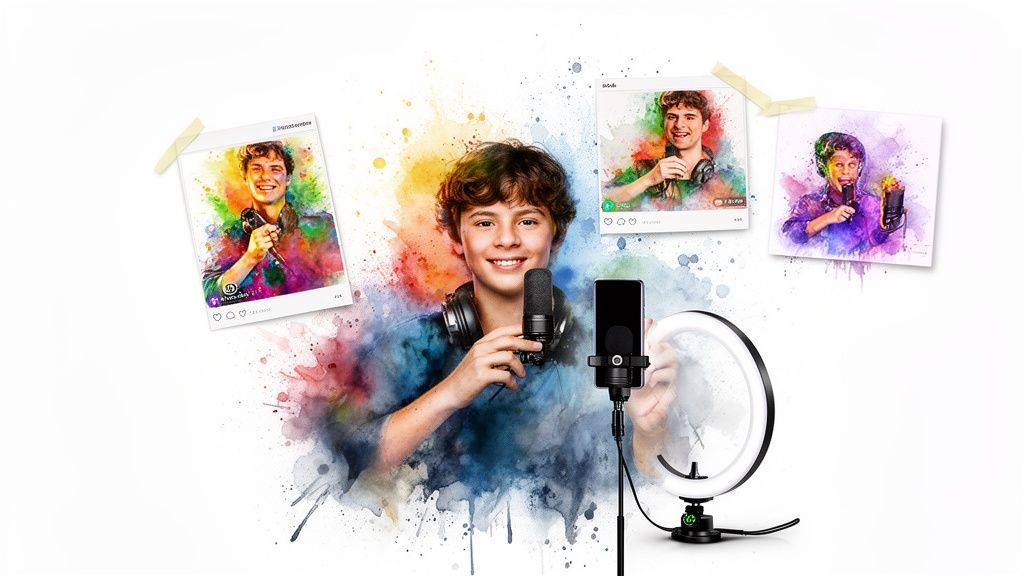
Face it: platforms like TikTok, Instagram Reels, and YouTube Shorts are where careers are being made right now. A single, grainy 15-second clip of you noodling on a new melody can do more for your visibility than a month of old-school promotion. The secret is to lean into the raw, unpolished vibe of the format.
Your content needs to be a mixed bag of awesome. Don't just copy and paste the same post everywhere.
Raw Performance Clips: Got a chorus? Grab your phone and record an acoustic version. Nail a nasty guitar solo? Film it. These don't have to be perfect—in fact, the little imperfections are what make them feel real and compelling. Behind-the-Scenes Gold: Show 'em the chaos. The tangled mess of cables in your studio, your notebook filled with lyrical scribbles, that moment of pure joy when you finally hit a tough vocal line. This is the stuff that makes fans feel like they're part of your inner circle. Challenges and Trends: Start a simple trend with a snippet of your song. It could be a weird dance, a duet challenge, or asking fans to share stories that your lyrics bring to mind. Give them a reason to play with your music, not just listen to it. Story Time: Pull back the curtain on a specific lyric. Tell the bizarre, funny, or heartbreaking story that inspired an entire song. You're not just selling a track; you're selling a universe.
And the numbers don't lie. We’ve all seen how TikTok's algorithm turns bedroom artists into global stars. It's a fact that behind-the-scenes Reels can pull in 3x the engagement of a standard promo post.
This is where AI tools can seriously level you up, letting you whip up AI music videos or celebrity-style promos in seconds. You can turn a simple track into a visual hook that grabs 40% more viewers, even if you're just starting out.
Used to be that creating a steady stream of slick visual content meant you needed a crew and a fat wallet. Not anymore. Artificial intelligence has crashed the party, giving indie artists the kind of production power that was once locked away in major label boardrooms. This is where knowing how to promote your music independently flips from a soul-crushing grind into a creative superpower.
Tools like SendFame let you do things that sound like they're straight out of a sci-fi movie. You can take a single static image—like your album art—and instantly animate it into a dynamic, thumb-stopping video perfectly sized for Reels or TikTok.
This is a peek at how simple it is. You can generate all sorts of wild, AI-powered content, from videos to celebrity shout-outs, with just a few clicks. It’s built to tear down the technical walls, so you can just focus on the cool ideas without ever touching a video editor.
Think about it: you could generate a unique animated visual for every single lyric in your song. Or have an AI-generated celebrity persona tell the world about your new track. You’re taking one song and turning it into an arsenal of content, giving you everything you need to post consistently and keep your audience hooked. For a deeper dive, check out our guide on building an effective social media for musicians.
"The social media game isn't about one viral hit. It's about consistently showing up with content that’s real, fun, or helpful. AI just gives you the firepower to do that at scale, turning one song into a hundred different social media moments."
To really make your stuff pop off, you need to understand what makes people click that share button. Diving into some dedicated viral video marketing strategies tailored for music artists can be a total game-changer. When you combine your authentic, personal content with the insane scalability of AI tools, you're ready to create that social media tsunami that finally gets your music heard.
Think getting your music featured on blogs and playlists is a game reserved for artists with a publicist on speed dial? Let's bust that myth right now. With a smart strategy, you can become your own best advocate and get the right people talking about your music. This isn't about spamming inboxes; it's about building real, genuine relationships.
The first step is a mental shift. You’re not just an artist; you’re an entrepreneur. Your DIY public relations (PR) campaign is a core part of your business, and it all starts with knowing exactly who to talk to.
Forget blasting your track to a generic list of a hundred blogs. That's a one-way ticket to the spam folder and a huge waste of your time. Your mission is to find the writers, curators, and creators who are already vibing with your specific sound.
Think of yourself as a detective. Start by identifying artists who sound like you—your "sonic siblings." Then, dig into where they're getting coverage. A simple Google search like "[Similar Artist Name] blog review" can unearth a goldmine of potential contacts.
Scour Spotify Playlists: Find playlists that feature your genre and similar artists. Look for curator names in the playlist description or on their profiles. Sometimes you have to do a little digging, but it's worth it. Explore Music Blogs: Dive into blogs that cover your niche. Don't just look at the big names; smaller, dedicated blogs often have more engaged audiences and are way more receptive to new artists. Follow the Trail on Social Media: See which publications and influencers are sharing music from your scene. They are actively looking for the next cool thing to show their followers.
When you're an indie artist, your pitch is everything. A personalized, well-researched email to the right person is 10x more effective than a generic blast to a hundred wrong ones. It shows you respect their work and genuinely believe your music is a good fit.
Journalists and curators are absolutely drowning in emails. Your job is to make your message the life raft they're happy to grab. That means keeping it short, personal, and getting straight to the point.
The perfect pitch email is an art form. It's part introduction, part story, and all about making their job as easy as possible. Here’s a simple structure that works time and time again:
A Killer Subject Line: Make it clear and intriguing. Something like "Submission: [Your Artist Name] - [Song Title] (For Fans of [Similar Artist])" does the trick.The Personal Connection: Start by mentioning a recent article they wrote or a song on their playlist you loved. This one sentence proves you've done your homework and you're not just another spammer.The Elevator Pitch: In two or three sentences, describe your sound and what makes your song special. What's the story behind it?The All-Important Link: Provide a private, streamable link. SoundCloud is perfect for this. Never attach an MP3 file—it clogs up their inbox and looks unprofessional.A Simple Sign-Off: Thank them for their time and include a link to your EPK (Electronic Press Kit).
One of the fastest ways to grow when you're figuring out how to promote your music independently is to join forces with other artists. Stop seeing other indie acts as competition and start seeing them as potential partners.
This is grassroots marketing at its finest. Collaboration exposes you to an entirely new, engaged audience that's already primed to like your music because they trust the artist you're working with. Recent industry data shows that while 53.3% of indie artists on Spotify have fewer than 500 monthly listeners, those who actively collaborate can see their plays jump by a staggering 200-300%. You can dig into more music industry trends and reports to see just how powerful this is.
Consider some of these killer cross-promotional ideas:
Feature Swaps: Guest on another artist's track or have them feature on yours. Playlist Sharing: Create a collaborative playlist and promote it heavily to both of your audiences. Joint Live Streams: Go live together on Instagram or TikTok for a joint performance or a casual Q&A session.
Building these relationships not only expands your reach but also creates a supportive community. It’s a powerful reminder that in the indie world, a rising tide really does lift all boats.
Let's be honest for a second. Spotify streams are great for vanity metrics, but they’re not going to pay your rent. A real, sustainable career in music isn't built on fractions of a penny per play. It’s built on a smart, diverse foundation of multiple income streams.
This is where you switch hats—from just being an artist to becoming the CEO of your own music enterprise. It isn't about selling out. It’s about building a stable business around your art so you have the freedom to keep creating for years to come.
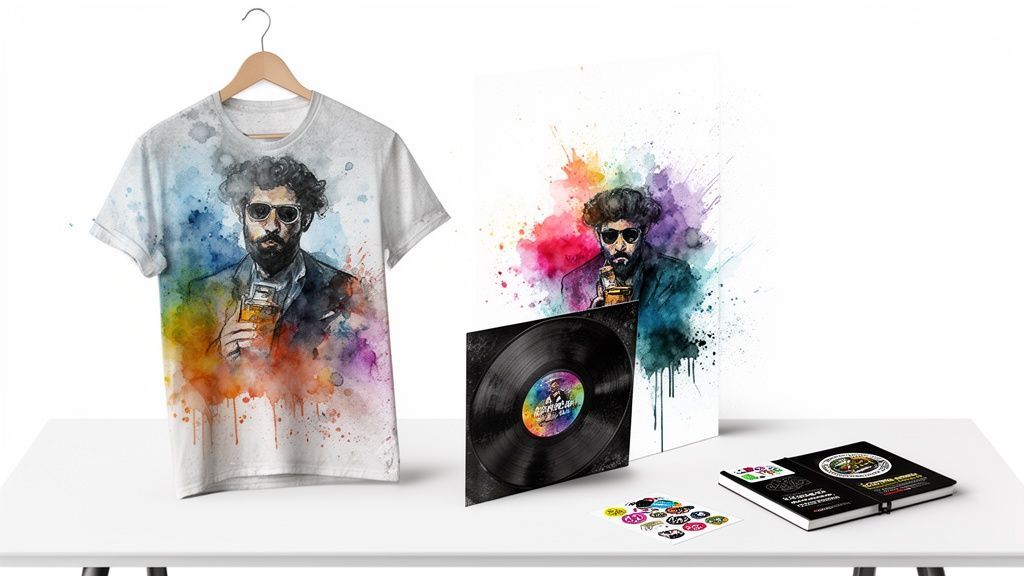
Your fans want to support you. And merchandise is one of the most direct and personal ways they can do that. A killer t-shirt design isn't just a piece of clothing; it's a walking billboard for your music and a badge of honor for your truest fans.
But please, don't just slap your album art on a cheap Gildan and call it a day. Think about what your audience would actually be excited to wear.
Design with Style: Create designs that stand on their own. Think about inside jokes from your lyrics, iconic imagery from a music video, or a design that just nails the vibe of your genre. Offer Variety: T-shirts are a classic, but why stop there? Hoodies, hats, tote bags, stickers, and enamel pins are all fantastic ways for fans to show their support at different price points. Create Scarcity: Nothing drives desire like exclusivity. Limited-edition items, like a small run of vinyl records or a special screen-printed tour poster, create a sense of urgency and make fans feel like they snagged something special.
The indie scene can be a grind. One recent study revealed that a staggering 77.8% of independent artists earned under $15,000 a year. But the top earners cracked the code by getting smart with their business—29.6% of them pointed to publishing and merchandise as crucial secondary revenue streams. You can dig deeper into the indie music landscape and see how direct-to-fan communication is a game-changer in Xposure Music's industry report.
Platforms like Bandcamp and Patreon are absolute lifelines for independent artists. They let you completely bypass the old-school gatekeepers and build a real, direct relationship with the people who love your music the most.
Bandcamp is a powerhouse for selling digital downloads, physical music, and merch, often with a "name your price" option. Their "Bandcamp Fridays" have become legendary—they waive their revenue share, putting nearly all the money directly into artists' pockets.
Patreon takes things even further by letting you build a subscription-based fan club. You can offer different tiers of support in exchange for exclusive content like unreleased demos, behind-the-scenes videos, or even personalized shout-outs. It's how you build a reliable, recurring income stream on the back of a genuine community.
This direct-to-fan model is how you turn casual listeners into a true community. It’s an incredible way to fund your next project while giving your biggest supporters a backstage pass to your creative world.
Ever heard a cool, unknown song in a TV show, movie, or ad and immediately pulled out your phone to Shazam it? That's sync licensing in action, and it’s a massively overlooked—but incredibly lucrative—revenue stream for indie artists.
Sync licensing is just the industry term for getting your music placed in visual media. A single placement in a popular Netflix show or a national ad campaign can not only land you a significant paycheck but can also expose your music to millions of new potential fans overnight.
Getting your music "sync-ready" is everything:
Own Your Rights: This is non-negotiable. You must control both the master recording (the "master") and the publishing rights (the composition). If you co-wrote the song, make sure you have clear agreements with everyone involved. Instrumentals are Key: Always, always have a high-quality instrumental version of your track ready to go. Music supervisors often need a version without vocals to slide under dialogue. Metadata is Your Friend: Make sure your audio files are meticulously tagged with your name, contact info, and genre. You have to make it dead simple for someone to find and contact you.
You can pitch your music to music supervisors directly or team up with sync agencies that specialize in placing indie music. This side of the business also opens doors to other opportunities, like brand partnerships. For a deep dive, check out our guide on how to get brand deals as a creator. Building these revenue streams is what turns your passion into a profession, giving you the financial runway to focus on what really matters—making incredible music.
Jumping into the world of indie music promotion can feel like trying to assemble IKEA furniture in the dark. It’s totally normal for a million questions to pop up. Let's clear the fog and tackle some of the most common hurdles so you can keep moving forward with confidence.
When you're running on a shoestring budget, every single dollar has to pull its weight. The classic mistake is trying to do everything at once and spreading your cash way too thin. Don't do that. Instead, zero in on what gives you the most bang for your buck.
Your number one investment, no exceptions, should be professional-quality production. You could write the best song of the century, but if the mix sounds like it was recorded in a tin can, people will skip it. It's just the hard truth.
Once your sound is locked in, put your money toward one or two killer visual assets. Think jaw-dropping cover art or a slick, short video you can chop up for all your social feeds. And while big, flashy ad campaigns are tempting, your money often goes a lot further with direct-to-fan tools. An email list, for example, is gold—while social media reach is a gamble, a good email list can see open rates around 30%. For a deeper dive into how a smart budget can work, check out these insights on the indie music industry.
It's so easy to get hooked on "vanity metrics" like likes and follows. They give you a nice little dopamine hit, but they don't pay the bills or get you on a festival stage. To really know if you're making progress, you have to track the numbers that truly move the needle.
Forget the fluff and focus on these KPIs:
Spotify for Artists Data: This is your command center. Watch your monthly listeners, but more importantly, look at where your streams are coming from. Is it your profile? A big playlist? Knowing this tells you what's working. Website Traffic & Email Sign-Ups: Are people clicking the link in your bio? That's a good start. Are they actually signing up for your mailing list? That's even better. It means they’re shifting from a casual listener to a true fan who wants to hear from you. Merch and Music Sales: This is the most straightforward signal of all. If people are willing to spend their hard-earned cash on your stuff, you’re doing something very, very right.
Tracking your data isn't about becoming a spreadsheet-obsessed robot. It's about listening to what your audience is telling you with their actions, so you can do more of what they love.
The brutally honest answer? Probably more time than you think. A good rule of thumb I've heard from countless successful indie artists is to spend just as much time promoting your music as you spent making it. Yeah, let that sink in. For most of us, music promotion is basically a part-time job.
But don't panic. The key is to be smart and consistent, not to burn yourself out.
Try breaking it down. Block out a couple of hours each day for specific tasks. Maybe Monday is for filming TikToks, Tuesday is for pitching your track to playlist curators, and Wednesday is for just hanging out in the comments and replying to fans. Consistency will beat frantic, last-minute intensity every single time.
Remember, figuring out how to promote your music independently is a marathon, not a sprint. The goal is to build sustainable habits that create real momentum over the long haul.
Ready to create stunning visuals for your next release without pulling your hair out? SendFame's AI-powered tools can spin your static album art into eye-catching videos, cook up unique promo images, and even generate entire AI music videos in seconds. Ditch the content creation grind and start making an impact. Explore what you can create with SendFame today.
Create Epic

SendFame
Create Epic with SendFame!
Questions: info@sendfame.com