How to Automate Social Media Posts and Reclaim Your Time
how to automate social media posts
Welcome offer — 56% OFF


Unleash your creativity with 10 game-changing album cover art ideas. From AI celebrity mashups to surreal art, get pro tips and prompts for 2026.
In a sea of infinite scroll, your album cover is your visual handshake, a silent promise of the sonic world within. A weak cover gets skipped; a powerful one gets clicked, shared, and remembered. But let's be real, brainstorming fresh album cover art ideas that feel both original and professional can be a massive creative block. That’s where innovation, and a little AI magic, comes in to save the day. For any artist, a cover isn't just a placeholder image; it's a powerful tool for visual storytelling and essential for building brand awareness for your creative business.
Forget the generic templates and tired clichés you’ve seen a thousand times. This guide is your ultimate cheat sheet to a collection of jaw-dropping concepts designed to make your music impossible to ignore. We’re diving deep into everything from surreal AI-generated dreamscapes and minimalist typography to interactive 3D masterpieces that fans can explore. Each idea is packed with practical tips, composition advice, and ready-to-use prompts for AI tools, so you can go from concept to creation in record time. Ready to craft a cover as legendary as your music? Let's get started.
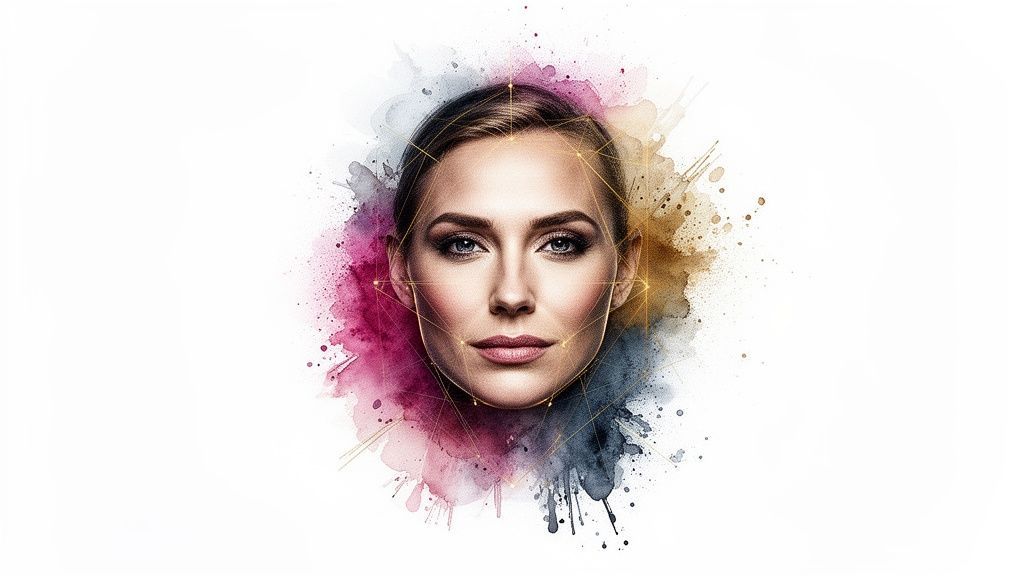
Ever wondered what a collaboration between David Bowie and Lady Gaga would look like, visually? An AI-generated celebrity mashup lets you create that impossible dream team right on your album cover. This cutting-edge concept uses AI to blend the facial features, styles, or personas of multiple celebrities into one bizarrely captivating and cohesive image. It’s the perfect album cover art idea for projects centered on themes of fusion, collaboration, or digital reality.
This method moves beyond simple photo editing, using generative AI to create a truly original portrait that feels both familiar and entirely new. It’s a fantastic way to generate buzz and create a visual that makes people do a double-take.
This approach is tailor-made for tech-forward genres like electronic, synthwave, or experimental pop. It immediately signals a modern, innovative sound. For artists using platforms like SendFame, it offers a way to feature celebrity-like visuals without the logistical nightmare of a real photoshoot, creating a high-concept look on an indie budget.
Disclose AI Use: Always be transparent. Add a small note like "Artwork created using generative AI" to maintain trust with your audience.Create Variations: Generate multiple mashups to A/B test on social media. See which combination gets the most engagement before finalizing your cover.Ensure Compliance: Double-check that your use of celebrity likenesses complies with platform terms of service and local regulations to avoid legal issues.Maintain Brand Consistency: For a fully integrated campaign, use tools like SendFame's AI Celebrity Video Generator to create promotional content that matches your cover's aesthetic. You can explore more about creating these unique visuals in our guide to AI-generated album covers.
Sometimes, the most powerful statement is the simplest one. A minimalist text-based design strips away all the visual noise, letting bold typography, a limited color palette, and clever use of negative space do the talking. This sophisticated approach makes the album title and artist's name the undeniable stars of the show, conveying confidence and conceptual clarity.
This design philosophy proves that you don't need complex imagery to create a memorable album cover. By focusing entirely on the text, you create a direct and impactful message. It’s one of the most versatile album cover art ideas, fitting everything from introspective indie folk to hard-hitting hip-hop.
This style is perfect for artists who want their music and message to speak for itself. It feels modern, clean, and intentional, making it a great fit for genres like indie, experimental, R&B, and even pop (think Taylor Swift’s folklore). For creators on platforms like SendFame, it’s an incredibly efficient way to produce a high-end, professional look without needing a photoshoot or intricate illustrations.
Typography Is Everything: Your font choice carries the entire design. Spend time selecting a typeface that reflects the album's mood, whether it's a clean sans-serif or an elegant serif.Test for Thumbnails: Ensure your design is legible even at a tiny size, like the 300x300px view on streaming platforms. Bold contrast is your best friend here.Animate Your Text: Use SendFame's Image-to-Video feature to bring your cover to life for social media promotions. A simple text reveal or subtle flicker can grab attention instantly.Go Custom: Consider using a custom or modified font to ensure your cover is completely unique and avoids looking like a template. You can explore more fundamental design principles in our guide on how to design album artwork.
Step into the dreamscape with surreal abstract digital art, an album cover art idea that bends reality to its breaking point. This concept uses digital manipulation or AI image generation to create impossible, dreamlike scenes that blend unexpected elements, distorted perspectives, and ethereal color palettes. Think floating pianos in watercolor clouds or organic digital landscapes that feel both alien and intimate. It’s the perfect choice for music that defies easy categorization.
This style moves beyond standard photography, allowing you to visualize the intangible emotions and textures of your sound. It grabs attention by being visually arresting and deeply thought-provoking, inviting listeners to decipher the meaning behind the beautiful chaos.
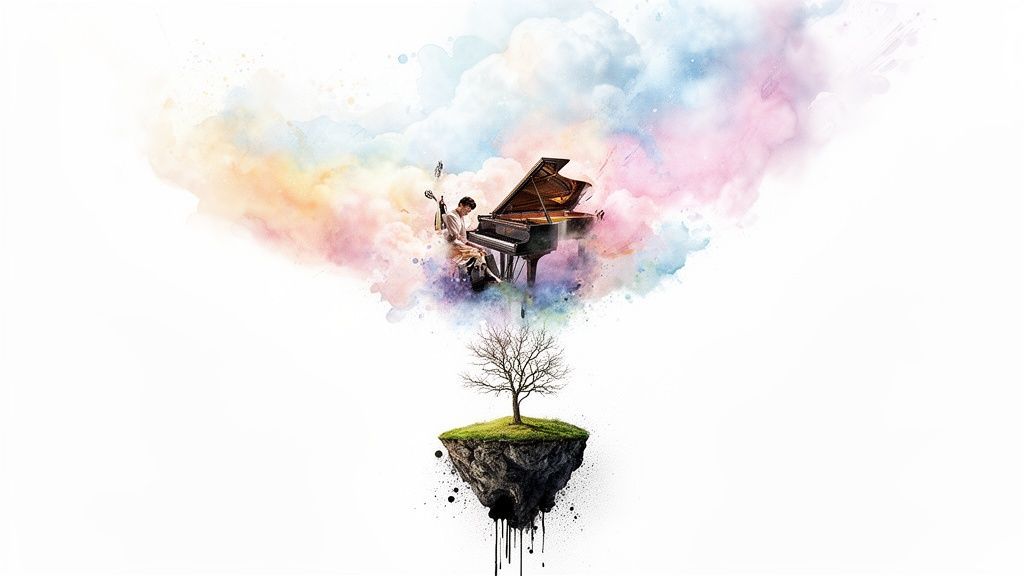
This aesthetic is a natural fit for genres like experimental, electronic, ambient, and dream pop, where the music itself explores abstract themes and otherworldly soundscapes. It signals to the listener that they’re in for a unique auditory journey. For artists using platforms like SendFame, it’s an opportunity to create a high-concept, gallery-worthy visual that perfectly captures a complex artistic vision without needing a massive budget or complex physical sets.
Prompt with Detail: Use highly descriptive prompts in an AI image generator. Instead of "surreal landscape," try "bioluminescent flora growing on a chrome mountain under a purple nebula," to get specific results.Connect Concept to Sound: Ensure the surreal imagery has a conceptual link to your album’s themes. If your music is about transformation, your visuals could depict a melting clock or a butterfly emerging from a machine.Incorporate Brand Colors: Weave your established brand colors into the surreal composition to maintain visual identity while still exploring an abstract style.Create Cohesive Assets: Pair your cover with equally surreal promotional content. You can find inspiration and tools for this with an AI album cover generator to ensure your entire campaign feels unified.
Nothing connects an audience to an artist quite like a genuine, personal image. A personal photo transformation takes your own photography and elevates it into professional album art using AI filters, digital editing, and artistic stylization. This approach grounds your project in authenticity while adding a layer of creative polish, making it perfect for artists who want to share a piece of themselves with their listeners.
This technique bridges the gap between a DIY aesthetic and a high-budget production. It allows artists to maintain an intimate, relatable feel-like the covers for Taylor Swift’s folklore or Clairo's lo-fi releases-without sacrificing visual quality. It's a powerful way to create album cover art ideas that feel both personal and iconic.
This method is ideal for genres like indie pop, R&B, folk, and singer-songwriter, where lyrical intimacy and artist personality are central. It creates a direct visual link between the musician and their music. For artists on platforms like SendFame, it’s an effective way to build a personal brand, transforming simple photos into compelling visual assets for an album, singles, and social media.
Start with Quality: Use a high-resolution photo with good lighting. Better source material gives AI and editing tools more detail to work with for a cleaner final result.Animate Your Art: Use SendFame’s Image-to-Video feature to bring your static photo cover to life, creating eye-catching animated visuals for Spotify Canvas or social media promotions.Keep Text Minimal: Let the transformed image be the hero. Use a simple, clean font for your name and album title to avoid cluttering the artwork.Grade Consistently: Apply the same color grading and filters across all related visuals, from the album cover to single releases, to create a cohesive brand identity. Discover more ways to refine your visuals with the best album cover design software.
Why settle for a flat image when you can invite your audience into a whole new dimension? An interactive 3D digital cover uses rendered objects, characters, or environments to create an immersive experience that goes beyond a static square. This is one of the most forward-thinking album cover art ideas, perfect for artists who want their visuals to feel as dynamic as their music.
This concept transforms the album cover from a simple picture into an explorable digital artifact. Think of The Weeknd’s 3D character aesthetic or Daft Punk's iconic helmets rendered in stunning detail. It’s an immediate signal that your project is built for the digital age, offering fans a deeper level of engagement.
This approach is a natural fit for hip-hop, electronic, and hyperpop artists who thrive on digital culture. It establishes a tech-forward brand identity and creates shareable content that stands out on visually-driven platforms. For those aiming to create truly unique and interactive digital album covers, incorporating cutting-edge technologies like those used in building NFT projects can elevate the concept even further.
Create Static Versions: While the 3D version is the star, ensure you have a high-quality 2D render for traditional streaming platforms and print media. Optimize for Web: Make sure your 3D files are optimized for fast loading on websites and social media to avoid frustrating your audience with long waits. Develop AR Filters: Extend the experience by creating promotional AR filters for Instagram and TikTok that let fans interact with elements from your cover. Test Across Devices: Render quality can vary significantly. Test your 3D cover on multiple devices and browsers to ensure a consistent, high-quality experience for everyone.
Nothing sparks a feeling of nostalgia quite like an album cover that looks like it was pulled from a different decade. A retro and vintage aesthetic borrows from specific historical periods, mimicking everything from 80s neon grids and 90s grunge zines to the distinctive look of VHS tapes or vinyl record packaging. This approach is one of the most powerful album cover art ideas for creating an instant emotional connection.
This style works by tapping into collective cultural memories, making your music feel both timeless and instantly familiar. It’s perfect for artists whose sound is inspired by the past, whether it’s the synth-pop of The Weeknd or the 90s alternative feel of Olivia Rodrigo’s SOUR. The goal is to create a visual identity that celebrates history while feeling fresh.
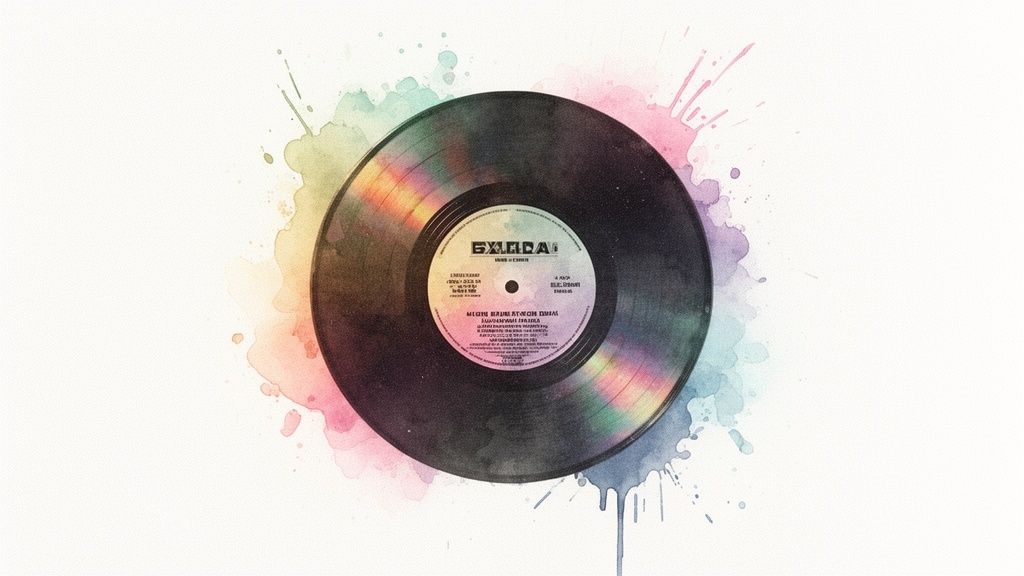
This concept is a go-to for indie, pop, and alternative genres that lean into nostalgic sounds. It immediately tells the listener what to expect sonically and establishes an authentic, curated brand identity. For artists using tools like SendFame, it’s easy to generate period-accurate imagery without needing to source authentic props or locations, making high-quality retro aesthetics accessible to everyone.
Research Your Era: Authenticity is key. Dive deep into the specific typography, color palettes, and photo styles of your chosen decade to get the details right. Use AI for Authenticity: Create era-specific visuals with an AI image generator. Use prompts like "90s disposable camera photo of a band" or "80s airbrushed chrome logo" for quick results. Balance Old and New: Combine vintage aesthetics with modern, high-resolution quality. A blurry cover should look like an intentional choice, not a technical mistake. Think Beyond Digital: Design mockups for physical formats like vinyl, cassettes, or CDs to extend the vintage theme across your promotional materials and merchandise.
Why release one standout cover when you can create a whole visual universe? A conceptual storytelling series turns your album art into a connected narrative across multiple releases. Each single, EP, or album cover acts as a new chapter, building on the last to tell a larger story. This is a masterclass in building fan investment and is one of the most sophisticated album cover art ideas for artists with a long-term vision.
This approach transforms listeners into followers of a saga, eagerly anticipating the next piece of the visual puzzle. It’s perfect for concept albums, character-driven projects, or any artist looking to establish a deep, cohesive artistic identity. It proves your music isn’t just a collection of songs; it’s an entire world.
This method is ideal for ambitious genres like progressive rock, concept hip-hop, R&B, and experimental electronic music. It rewards dedicated fans and creates a powerful sense of artistic depth. For artists using SendFame to manage a steady stream of releases, this strategy ensures a consistent and compelling brand narrative that keeps your audience hooked.
Map the Narrative: Before creating any art, outline the entire story arc from start to finish. Know what happens in each "chapter" to ensure visual coherence. Maintain Visual Consistency: Use consistent color palettes, typography, or recurring symbols across all covers. This visual thread is what ties the series together. Leverage Progressive Reveals: Use social media to tease upcoming covers and reveal pieces of the story over time, building anticipation for each new music drop. Create Behind-the-Scenes Content: Share videos or posts explaining the narrative connections and symbolism. This deepens fan engagement and makes them feel like insiders.
Turn your music into a visual formula with a cover that transforms abstract data into a compelling artistic design. This highly conceptual approach uses information design to translate themes, sounds, or statistics related to your album into beautiful graphics. Imagine visualizing the frequency data of your lead single or mapping the emotional arc of your lyrics into a clean, modern infographic. It's one of the most intellectually stimulating album cover art ideas available.
This concept moves beyond simple aesthetics, embedding layers of meaning directly into the visual framework. It’s perfect for artists who want to create a conversation piece, inviting listeners to decode the story behind the art. Think of the intricate, algorithmically-generated works of Radiohead or the sound-wave visualizations seen in Jon Hopkins' projects.
This approach is a natural fit for electronic, IDM, ambient, and experimental genres, where the music itself often feels mathematical or systemic. It signals a meticulous, intelligent, and tech-forward artist. The design immediately tells the audience that there is depth to be explored, both sonically and conceptually, rewarding attentive fans with a richer experience.
Connect Data to Concept: Ensure the data you visualize directly relates to the album's core theme. Is it your heartbeat during recording? The lyrical word count? The connection is key. Prioritize Clarity: Even complex data should be presented in a visually clear and aesthetically pleasing way. Avoid clutter that makes the design feel like a messy spreadsheet. Create Explainer Content: Use social media to post a "key" or a short video explaining what the data on your cover represents. This deepens fan engagement and appreciation. Animate Your Data: Use tools that can animate static images to bring your data visualization to life for promotional videos or social media posts, creating a dynamic preview of your music's structure.
Why design in a vacuum when you can turn your fanbase into your creative department? Collaborative fan-generated content invites your community to directly shape your album cover, transforming listeners into partners. This approach involves crowdsourcing artwork, running polls on design elements, or hosting competitions, creating a powerful sense of shared ownership over the final product.
This community-first strategy is more than just a marketing gimmick; it builds an authentic connection and turns your album release into a celebrated group effort. It’s one of the most organic album cover art ideas for fostering loyalty and generating buzz from the ground up, as seen in fan-selected artwork campaigns by major artists and Kickstarter projects.
This method is perfect for independent artists, crowdfunding campaigns, or anyone looking to deepen their community ties. It works exceptionally well for genres with dedicated fanbases, like folk, indie rock, or pop-punk. By involving fans, you guarantee that your audience is already invested before the first track even drops, creating an army of advocates ready to share the work they helped create.
Establish Clear Guidelines: Set specific theme parameters, color palettes, and submission rules upfront to ensure all entries align with your artistic vision. Use AI for Voting Options: Generate several professional-quality design concepts using AI tools. Present these polished options to your fans for a final vote, combining professional quality with community choice. Document the Process: Turn the entire collaboration into behind-the-scenes content for social media. Share submissions, highlight creators, and build excitement around the decision-making process. Credit and Reward Winners: Publicly celebrate the selected fan designer with prominent credits and a special reward. This encourages future participation and shows genuine appreciation for their contribution.
In today's fragmented digital landscape, your album cover isn't just one static image; it's a dynamic visual that needs to look good everywhere. A multi-format adaptive design system treats your cover art not as a single file, but as a flexible brand identity that intelligently adapts across vinyl, streaming thumbnails, social media stories, and even AR experiences. This approach ensures your visual message remains powerful and consistent, no matter the context.
This isn't just about cropping a square image. It’s about creating a cohesive visual language with core elements (logo, color palette, key imagery) that can be reconfigured for any platform. Think of it as creating a visual toolkit for your music, making your release look professional and instantly recognizable everywhere your audience finds it.
This system is essential for any modern artist aiming for a professional, multi-platform release. It guarantees that your artwork retains its impact, whether it's a tiny 300x300 pixel icon on a Spotify playlist or a full-screen vertical video on TikTok. It’s the standard for major label releases and a must-have for independent artists who want to compete visually.
Design for the Smallest First: Start with the most restrictive format, typically the streaming thumbnail. If your design is clear and recognizable at that tiny scale, it will work anywhere. Create Brand Guidelines: Document your core design elements. Specify your exact colors, fonts, and logo placement rules to maintain consistency across all assets. Test on Real Platforms: Before finalizing, upload your assets to Spotify, Apple Music, and Instagram to see how they actually appear to users. Check for readability and visual impact. Build Reusable Templates: Create templates for future singles or EPs. This ensures your entire discography maintains a cohesive visual identity, strengthening your artist brand over time.
| Design | 🔄 Complexity | ⚡ Resources & Speed | ⭐ Expected Outcomes | 📊 Ideal Use Cases | 💡 Key Advantage / Tips |
|---|---|---|---|---|---|
| AI-Generated Celebrity Mashup | High — prompt engineering + legal/ethical checks | Fast generation with AI; requires compute and legal review | ⭐⭐⭐⭐ — high visual impact, viral potential but authenticity concerns | AI-generated music projects, experimental promos | Disclose AI use; A/B test variations; use SendFame integrations |
| Minimalist Text-Based Design | Low — strong typographic decisions needed | Low cost and fast with basic tools | ⭐⭐⭐ — timeless, highly legible across sizes | Corporate content, digital marketers, artists seeking clean identity | Invest in typography; test at thumbnail size |
| Surreal Abstract Digital Art | High — complex composition and prompt iteration | Moderate speed but resource-intensive for high quality | ⭐⭐⭐⭐ — memorable and conversation-starting, niche mainstream fit | Electronic, experimental, indie releases | Use detailed prompts; keep imagery conceptually tied to music |
| Personal Photo Transformation | Low–Medium — depends on original photo quality | Low cost and quick if source photos are strong | ⭐⭐⭐ — authentic and relatable, variable "wow" factor | Influencers, personal-brand artists, intimate releases | Use high-quality lighting; animate with Image-to-Video for engagement |
| Interactive 3D Digital Cover | Very High — 3D modeling, rendering, and optimization | Slow and costly; needs specialized software and skills | ⭐⭐⭐⭐ — cutting-edge and immersive, great for tech audiences | Tech-forward artists, AR campaigns, electronic/hip-hop genres | Optimize for web/devices; produce static versions for print |
| Retro and Vintage Aesthetic | Medium — era research and stylistic accuracy required | Moderate; can be produced with design tools or AI assets | ⭐⭐⭐ — nostalgic, thematically cohesive but risk of cliché | Nostalgic albums, indie artists, Gen Z retro campaigns | Research era details; balance nostalgia with modern polish |
| Conceptual Storytelling Series | Very High — long-term planning and narrative consistency | Time-intensive across multiple releases | ⭐⭐⭐⭐ — sustained engagement and strong artistic identity | Multi-release projects, concept albums, ambitious independents | Plan the arc early; use AI to keep visuals consistent |
| Data Visualization & Infographic Design | High — requires data-to-design translation expertise | Moderate–High; needs data, designers, and testing | ⭐⭐⭐ — intellectually engaging, niche appeal | Experimental electronic, tech companies, data-driven projects | Ensure data relevance; keep visuals clear and test comprehension |
| Collaborative Fan-Generated Content | Medium — coordination, curation, and rights management | Low monetary cost but time-consuming to manage community | ⭐⭐⭐ — high engagement and organic marketing, variable polish | Fan-driven artists, crowdfunding campaigns, community builders | Set clear guidelines; use AI to produce professional voting options |
| Multi-Format Adaptive Design System | High — system design, testing, format-specific variants | Time-consuming up front; saves effort across platforms | ⭐⭐⭐⭐ — consistent brand presence and maximum platform impact | Professional releases, digital marketers, multiplatform campaigns | Start with thumbnail constraints; create templates and test widely |
You've just navigated a creative gauntlet of album cover art ideas, from the mind-bending possibilities of AI-generated celebrity mashups to the quiet confidence of minimalist text. We've explored how to transform personal photos into iconic art, build entire visual worlds with conceptual storytelling, and even turn raw data into a compelling infographic design. The journey through these ten distinct concepts reveals a powerful truth: your album cover is not a static image, but the very first note of your musical story.
The most critical takeaway is the power of fusion. The lines between these ideas are meant to be blurred. Imagine combining a Retro and Vintage Aesthetic with a thoroughly modern Interactive 3D Digital Cover, creating a nostalgic experience that feels alive in the user's hands. Or, picture using a Collaborative Fan-Generated campaign to fuel the imagery for a Multi-Format Adaptive Design System, ensuring your community is literally part of your visual identity across every platform. These are the kinds of innovative combinations that stop the scroll and demand a listen.
So, where do you go from here? The path from inspiration to execution is shorter than you think. Here are your next steps:
Revisit and Select: Go back through the list and bookmark the two or three concepts that resonate most deeply with your music's genre, mood, and message. Don't just pick what looks cool; choose what feels right. Start Prompting: Grab the AI prompt templates from your chosen ideas and start experimenting. Don't aim for perfection on the first try. The goal is to generate a wide range of visual starting points, exploring different compositions, color palettes, and artistic styles. Remix and Refine: Take the most promising AI-generated outputs and think about how you can personalize them. Can you layer in a personal photo? Add your signature typography? This is where your unique artistic voice transforms a great concept into your masterpiece.
Mastering these approaches is about more than just creating a pretty picture for Spotify. It's about taking control of your brand, building a deeper connection with your audience, and crafting a visual legacy that complements your sound. Your cover art is a declaration of intent, a visual handshake that tells the world who you are as an artist before they even press play. By embracing these innovative album cover art ideas, you’re not just designing a thumbnail; you're building an invitation into your world.
Ready to bring your vision to life without the hassle of complex design software? SendFame is your all-in-one AI creative studio, perfect for generating stunning, high-resolution album covers, promotional videos, and more with just a few clicks. Stop dreaming about your perfect cover and start creating it today at SendFame.
Create Epic

SendFame

Create Epic with SendFame!
Questions: info@sendfame.com