How to Plan Virtual Events That Actually Engage
how to plan virtual events
Welcome offer — 56% OFF


Discover the best software for event planners in 2025. Our guide covers 12 top tools for ticketing, marketing, and management to make your next event a hit.
Let's be honest: planning an event with a Frankenstein's monster of spreadsheets, email chains, and sticky notes is a recipe for chaos. One minute you're finalizing the keynote speaker, the next you're buried in a dozen tabs trying to track RSVPs, vendor payments, and seating charts. The right software doesn't just organize your tasks; it transforms the entire experience for you, your team, and your attendees. It acts as your central command center, automating the tedious work so you can focus on creating memorable moments.
But with hundreds of tools all promising to be the ultimate solution, how do you find the perfect one without losing your mind in a sea of free trials? Forget the endless demos and confusing feature lists. We've done the heavy lifting to bring you the definitive guide to the 12 best software for event planners. For those looking to truly elevate their workflow beyond just event-specific tools, exploring a dedicated guide to automated project management can reveal even more powerful ways to streamline complex operations.
This isn't just another generic list. We're diving deep into each platform, covering everything from key features and pricing to the nitty-gritty pros and cons. You'll see exactly what each tool looks like with screenshots and get direct links to explore them yourself. Whether you're orchestrating a massive corporate conference with Cvent, a viral virtual summit with Airmeet, or a chic wedding, this list has a solution tailored for your specific needs, budget, and sanity. Get ready to ditch the chaos and discover the tool that will make your next event legendary.
SendFame emerges as a game-changing tool in our roundup, earning its top spot by offering something truly unique: an all-in-one, AI-powered creative studio. While many platforms focus on logistics, SendFame tackles the creative and marketing side of events, making it one of the best software for event planners looking to generate buzz and create unforgettable moments. It empowers you to produce polished videos, custom songs, and stunning images in seconds, no design or production skills required.
This platform is your secret weapon for creating high-impact promotional materials and personalized event content that attendees will be talking about long after the lights go down. From a viral-worthy social media teaser to a personalized celebrity-style thank you video for VIP guests, SendFame collapses the entire creative process into a few simple clicks.

What truly sets SendFame apart is its multi-modal AI engine. You aren't just getting an image generator; you're getting a full creative suite. Imagine generating a theme song for your annual conference, complete with a music video, and then creating a series of hyper-realistic celebrity-style invitation videos, all from the same dashboard. The speed and simplicity are unparalleled, allowing a single planner to execute a marketing campaign that would typically require a team of creatives.
Real-World Impact: The ability to generate a custom song and music video for an event theme or a newly married couple provides a "wow" factor that traditional software simply can't match. It’s a powerful tool for creating deeply personal and shareable moments.
AI Music & Video Generator: Instantly create a complete, original song with vocals and a music video. Perfect for event themes, wedding montages, or corporate anthems. Hyper-Realistic AI Celebrity Videos: Type a script and generate a personalized video message from a familiar celebrity persona. Use it for invitations, award announcements, or special shout-outs. Image-to-Video Tool: Animate static images, like your event logo or a photo of your keynote speaker, to create dynamic social media content. One-Click Workflow: Designed for the non-technical user, the platform is incredibly intuitive. If you can type a prompt, you can create professional-grade content.
Corporate Events: Generate a personalized welcome video from a "CEO" or a "celebrity" to kick off a sales conference. Create a wrap-up music video using event highlights.Weddings: Craft a custom love song using the couple's story for their first dance. Send personalized "celebrity" thank you messages to the wedding party.Social & Marketing: Quickly produce a dozen different video ads for your event to see what resonates on social media. Dive deeper into the strategy with these tips on video personalization software from SendFame.
| Pros | Cons |
|---|---|
| Unmatched Creative Versatility: A single platform for songs, music videos, images, and custom video. | Ethical & Legal Nuances: Using celebrity likenesses for commercial purposes requires careful review of SendFame’s terms and local laws to avoid legal issues. |
| Incredibly Fast & Easy: Generates finished, high-quality assets in mere seconds. | Pricing Clarity: While promotions are frequent, specific pricing tiers for heavy usage are not immediately obvious and may require visiting the site. |
| High Engagement Potential: The novelty of custom songs and celebrity videos drives social sharing. | |
| Constant Innovation: The company frequently adds new features like the Image-to-Video tool. |
SendFame operates on a model where users can get started quickly, but advanced features and high-volume generation will likely require a paid plan. The company often runs significant promotions (like 56% off), so it’s worth checking their website directly for the latest pricing.
Learn more at sendfame.com
Cvent is the heavyweight champion of event management, an all-in-one juggernaut designed for those orchestrating large-scale, complex events. Think of it less as a tool and more as a complete operating system for your corporate conferences, massive trade shows, and sophisticated hybrid gatherings. It’s the kind of robust platform that makes other best software for event planners look like a lightweight spreadsheet.
If you’re juggling multi-track sessions, international attendees, and intricate sponsorship tiers, Cvent’s end-to-end platform is your command center. It handles everything from registration and branded event websites to onsite check-in, lead retrieval for exhibitors, and a powerful mobile app to keep attendees engaged.

Cvent truly shines with its Event Diagramming module, allowing you to create detailed 2D and 3D floor plans for your venue, ensuring everything from booth placement to fire exits is meticulously planned. This feature alone is a game-changer for large-scale logistics. The platform’s deep analytics also provide invaluable post-event insights, helping you prove ROI to stakeholders.
Ideal For: Enterprise-level corporate event planners, associations, and anyone managing complex, multi-day conferences or trade shows. Pricing: Pricing is customized and quote-based, reflecting its enterprise focus. Expect a significant investment compared to SMB tools. Pro Tip: Leverage Cvent's 24/7 support and extensive training library. The platform is powerful but has a notable learning curve; mastering its features will unlock its full potential.
Pros:
Incredibly deep, comprehensive feature set for any event type. Excellent 24/7 customer support and training resources. Powerful venue sourcing and diagramming tools.
Cons:
High price point makes it inaccessible for smaller businesses or one-off events. The sheer number of features can be overwhelming for new users.
Website:https://www.cvent.com
Eventbrite is the people’s champion of ticketing, a household name that democratizes event creation for the masses. It’s less of a complex management suite and more of an accessible, self-service platform with a massive built-in audience. If your goal is to get your public workshop, local music festival, or community fun-run in front of as many eyes as possible with minimal fuss, Eventbrite is arguably the best software for event planners to start with.
The platform's core strength lies in its simplicity and powerful consumer marketplace. Setting up a professional-looking event page with ticketing and payment processing takes minutes, not days. This allows you to focus on promotion and execution while Eventbrite’s massive user base helps with discovery, driving ticket sales for public-facing events.
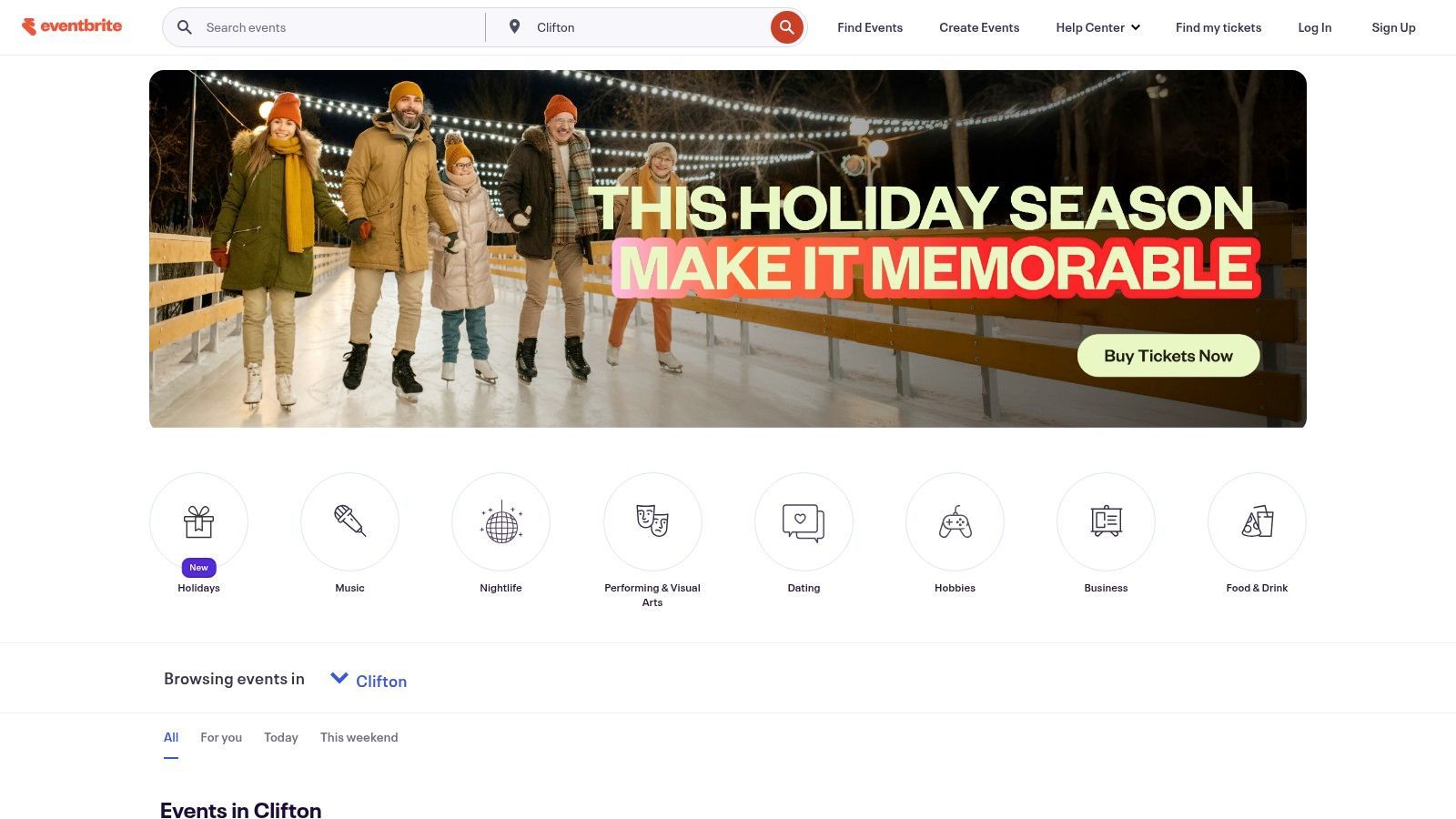
Eventbrite excels with its straightforward ticketing and registration tools. The Organizer app is a fantastic companion for event day, allowing for seamless mobile check-in using QR codes and at-the-door ticket sales. This feature simplifies entry management, which you can learn more about by exploring the top QR code platforms for automation. Its transparent, per-ticket fee structure for paid events (it’s free for free events) makes budgeting predictable.
Ideal For: Organizers of public-facing events like concerts, festivals, classes, fundraisers, and community gatherings. Pricing: Free to use for free events. For paid events, fees are charged per ticket sold, with different tiers (Flex, Pro) offering more features. Pro Tip: Maximize your event's visibility by using descriptive tags and a compelling category. Eventbrite's discovery algorithm heavily relies on this information to recommend your event to interested local users.
Pros:
Huge built-in marketplace for event discovery and ticket sales. Extremely user-friendly and fast to set up. Excellent mobile app for on-the-go management and check-in.
Cons:
Per-ticket fees can become costly for high-priced or large-volume events. Lacks the deep customization and management features needed for complex B2B conferences.
Website:https://www.eventbrite.com
Bizzabo is the "Event Experience OS" for B2B marketers and planners who believe an event is more than just a gathering; it's a strategic experience. Designed for mid-market and enterprise conferences, it excels at transforming in-person interactions into measurable data, making it a strong contender for the best software for event planners focused on ROI.
Where other platforms focus solely on logistics, Bizzabo doubles down on engagement and analytics. It’s an all-in-one system covering registration, marketing automation, and mobile apps, but its true magic lies in its onsite tech. The platform is built to create immersive experiences that yield rich data, proving your event's impact long after the last session ends.

Bizzabo’s standout feature is its Klik SmartBadges technology. These wearable devices facilitate effortless networking and contact sharing with a simple click, while providing planners with real-time heatmaps and session attendance data. This transforms passive attendees into active data points, giving sponsors tangible proof of their investment and helping you understand audience behavior on a granular level. The platform's integrated marketing and analytics tools ensure you can nurture leads effectively post-event.
Ideal For: B2B marketers and corporate planners organizing mid-to-large scale conferences where onsite engagement, lead capture, and data analytics are top priorities. Pricing: Platform pricing is user-based and transparently tiered, but targets mid-market and enterprise budgets. Pro Tip: Plan your logistics for the SmartBadges well in advance. While incredibly powerful, they require shipping and distribution, so coordinate with your venue and staff to ensure a smooth deployment process.
Pros:
Exceptional onsite engagement and data capture with wearable tech. Strong marketing automation and analytics to prove event ROI. Transparent, user-based pricing tiers with 24/7 support.
Cons:
Entry-level pricing is geared toward mid-market or enterprise users. The wearable tech adds an extra layer of logistics and potential shipping costs.
Website:https://www.bizzabo.com
Whova is the master of attendee engagement, transforming your event from a passive viewing experience into an active, buzzing community. It’s an all-in-one platform that excels at connecting people, making it a standout choice for associations, academic conferences, and SMB events where networking is the main attraction. While other platforms focus on logistics, Whova doubles down on creating a vibrant social ecosystem for your event.
This platform bridges the gap between powerful features and user-friendly design. It delivers a top-tier mobile app that acts as a central hub for attendees to view agendas, interact in community forums, exchange digital business cards, and schedule one-on-one meetups. For planners seeking the best software for event planners that puts the attendee experience first, Whova is a formidable contender.
Whova’s magic lies in its award-winning mobile event app. Features like the Community Board, attendee matchmaking, and gamification encourage organic interaction long before, during, and after the event. This sustained engagement provides immense value for sponsors, who get prolonged visibility, and for attendees, who build meaningful connections. The platform also capably handles registration, websites, and hybrid/virtual logistics.
Ideal For: Associations, educational conferences, and SMBs prioritizing attendee networking and community building. Pricing: Whova operates on a quote-based model, so you'll need to contact their sales team for a custom price. Pro Tip: Actively moderate and seed conversations in the Community Board before the event starts. This encourages early adoption and sets a collaborative tone for the entire conference.
Pros:
Exceptional attendee networking and engagement features. Highly-rated for user-friendliness and excellent customer support. Strong mobile app experience for in-person, virtual, and hybrid events.
Cons:
Quote-based pricing lacks transparency for initial budgeting. May have fewer deep enterprise integrations compared to platforms like Cvent.
Website:https://whova.com
Stova is the result of a powerhouse merger (Aventri, MeetingPlay, and eventcore), creating an enterprise-grade event technology stack built for flexibility. Where some platforms lock you into their entire ecosystem, Stova offers a more modular approach, allowing you to pick and choose components that fit your specific needs, even if you’re using a third-party registration tool. It’s a versatile solution that adapts to your workflow, not the other way around.
This platform is engineered for planners who need robust, reliable technology from the first click to the final badge scan. It excels at managing complex registration, delivering personalized mobile app experiences, and, most notably, providing sophisticated onsite services. If you’re looking for some of the best software for event planners that won't buckle under the pressure of a high-stakes, high-traffic event, Stova is a serious contender.
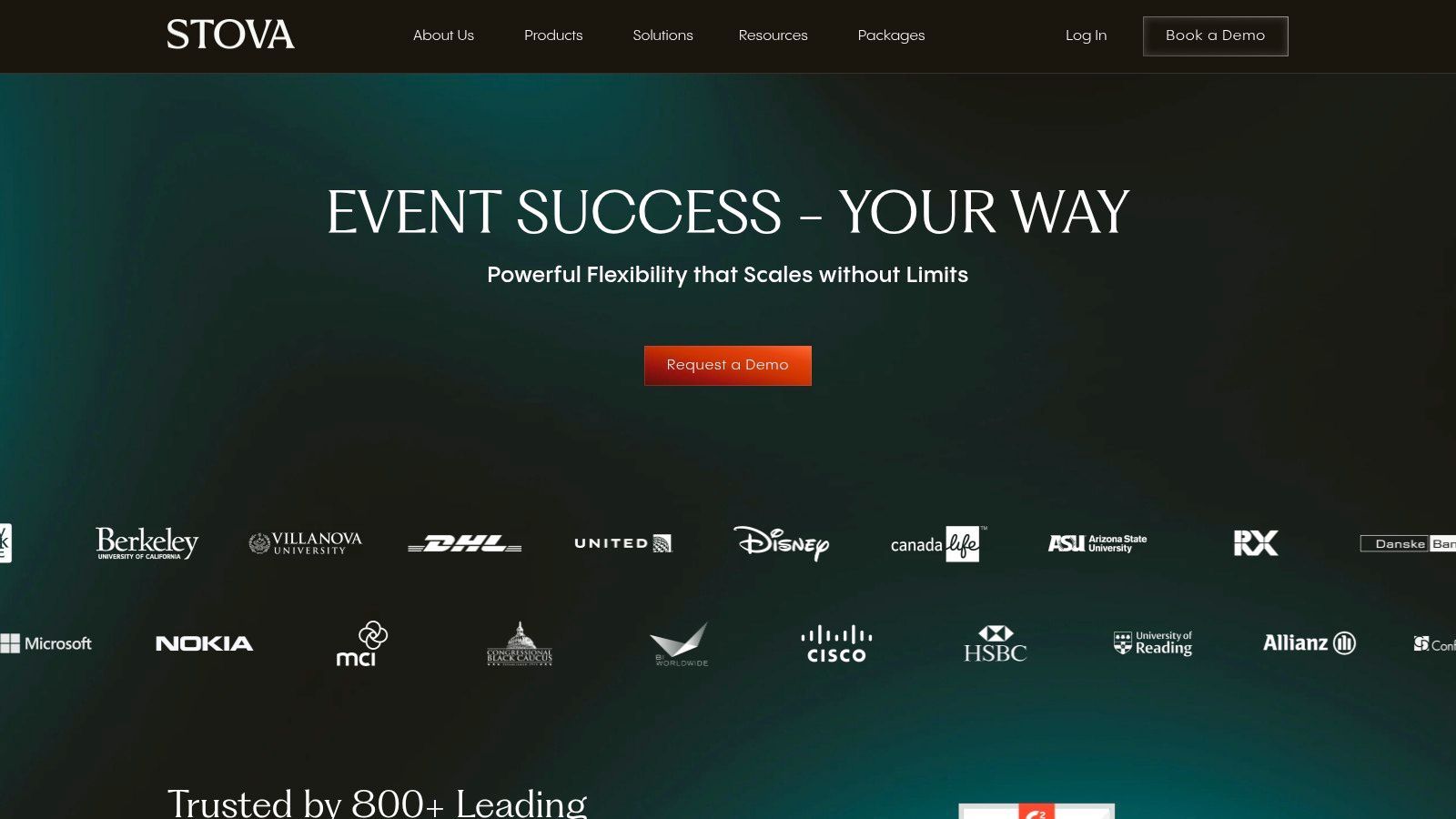
Stova’s standout feature is its onsite service flexibility. With options like BadgeNext for plug-and-print badging and support for everything from QR codes to NFC, it handles check-in for both intimate meetings and tier-1 conferences with ease. The mobile app is another strong point, offering deep personalization, networking tools, and powerful analytics to track engagement in real-time.
Ideal For: Corporate event managers and agencies that need a reliable, scalable solution with best-in-class onsite hardware and check-in workflows. Pricing: Pricing is quote-based and tailored to your event's specific needs, reflecting its enterprise focus. Pro Tip: Explore Stova's APIs and integrations. Its ability to connect with other systems like your CRM or marketing automation platform can create a seamless data flow and a more cohesive event strategy.
Pros:
Highly flexible onsite hardware and check-in workflows. Components can be used with third-party registration systems. Powerful mobile app with excellent personalization and analytics.
Cons:
Pricing is not publicly available and requires a sales quote. The extensive feature set may be overly complex for smaller, simpler events.
Website:https://stova.io
Splash is where event management meets brand marketing in a beautifully designed package. It’s an event marketing platform built for teams that obsess over brand consistency and attendee experience, from the first invitation to the post-event follow-up. While other platforms focus on pure logistics, Splash ensures every touchpoint is a seamless extension of your brand identity.
If you need to empower your marketing team to quickly spin up stunning, on-brand event pages without hassling designers, Splash is your go-to. It's the best software for event planners who view events as a core part of their marketing funnel, enabling them to capture rich attendee data and pipe it directly into their CRM and marketing automation tools.
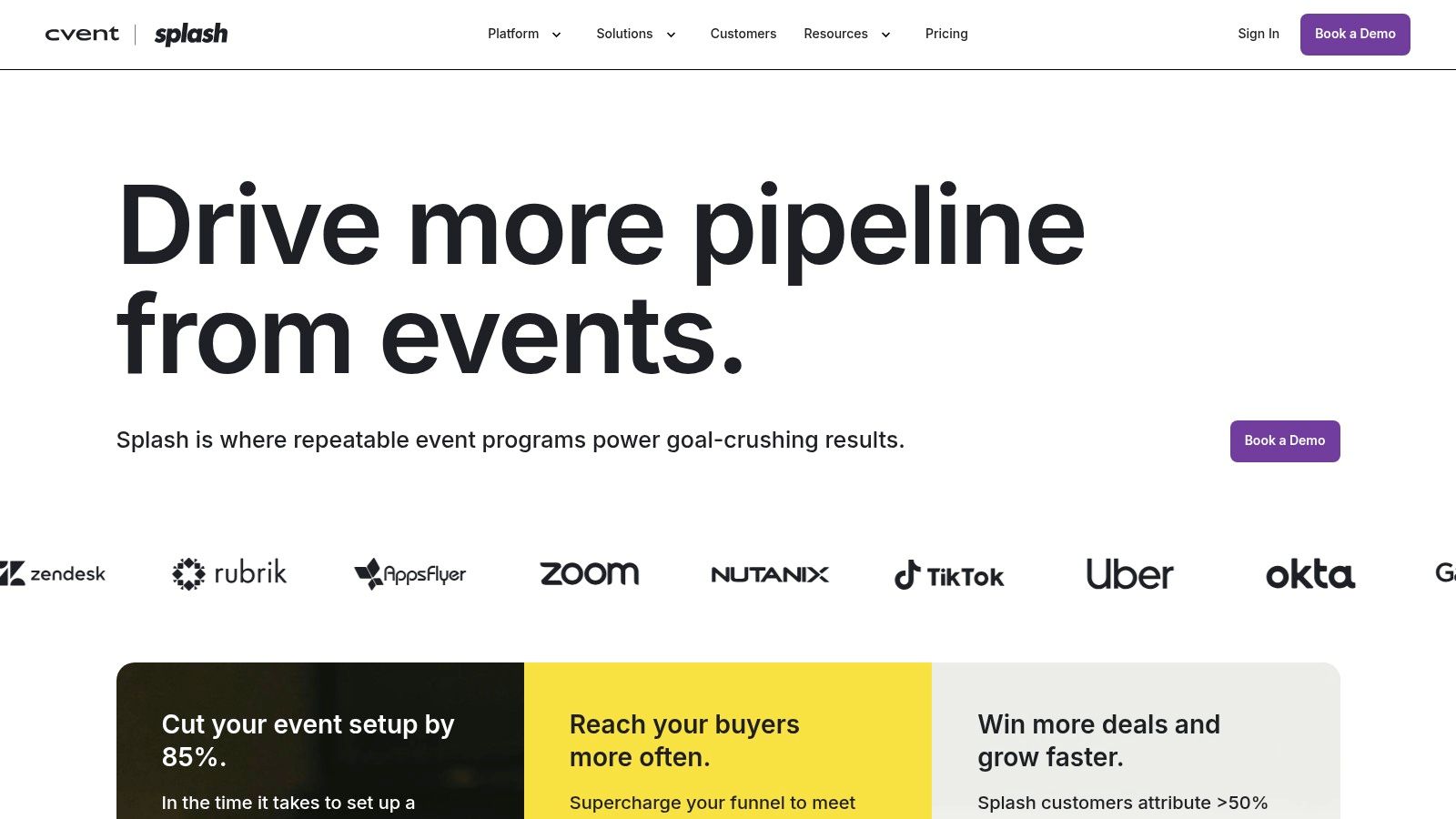
Splash’s superpower is its design-forward approach, with a powerful templating system that allows for brand governance at scale. Marketers can create beautiful event pages, registration forms, and emails in minutes, all locked into the company's brand guidelines. Its seamless integrations with tools like Salesforce and Marketo make it a darling of corporate marketing departments.
Ideal For: Marketing teams, corporate event planners, and brands hosting a high volume of branded experiences, from webinars to field marketing events.Pricing: Pricing is not publicly listed and requires a custom quote for Pro and Enterprise plans, positioning it for businesses rather than individual users.Pro Tip: Use the role-based permissions to empower different team members (like event hosts and crew) with the exact access they need, streamlining your workflow without risking brand integrity. This also helps when you want to learn more about how to improve social media engagement for your events.
Pros:
Superior design capabilities and brand control for event pages. Excellent integrations with major CRM and marketing automation platforms. Enables rapid creation of events at scale while maintaining consistency.
Cons:
Less suited for complex logistical needs like trade show floor plans or multi-track session scheduling. Opaque, quote-based pricing can be a barrier for smaller organizations.
Website:https://splashthat.com
Zoho Backstage is the savvy event planner's secret weapon, especially for those already embedded in the Zoho business ecosystem. It’s an end-to-end event management platform that delivers robust features without the enterprise-level price tag, making it one of the best software for event planners looking for maximum value. Think of it as the highly capable, well-integrated sibling to the bigger, more complex platforms.
If you need to manage everything from a multi-session webinar to a mid-sized hybrid conference, Backstage has you covered. It offers a seamless experience covering event websites, ticketing with zero commission, agenda management, and powerful attendee engagement tools. Its native integration with Zoho CRM, Campaigns, and other apps transforms your event into a fully connected part of your business operations.
Where Zoho Backstage truly excels is its transparent pricing and value proposition. The ability to run unlimited events on subscription plans or use a pay-per-event model offers incredible flexibility. Features like built-in webcasting, virtual lounges for networking, and detailed analytics provide a comprehensive toolkit for virtual, hybrid, and in-person events.
Ideal For: SMBs, marketing teams, and organizations already using the Zoho suite who want a powerful, integrated event tool with predictable costs. Pricing: Offers a free plan for small events, pay-per-event options, and affordable monthly subscriptions. All paid plans boast 0% ticketing commission. Pro Tip: Leverage the native Zoho CRM integration to automatically sync attendee data. This creates a powerful feedback loop for your sales and marketing teams, turning event attendees into qualified leads without manual data entry.
Pros:
Transparent pricing with a free plan and 0% ticketing commission. Excellent feature set for the price, covering all event types. Seamless native integration with the wider Zoho ecosystem (CRM, etc.).
Cons:
Attendee caps on tiered plans may require purchasing add-ons for larger events. Lacks the specialized, enterprise-grade onsite hardware services offered by dedicated providers.
Website:https://www.zoho.com/backstage
Swapcard is the event platform for planners who believe networking is the main event. It’s an AI-powered matchmaking engine disguised as an event app, designed to foster meaningful connections at conferences, trade shows, and community gatherings. Instead of just managing logistics, Swapcard focuses on engineering interactions, making it one of the best software for event planners focused on attendee and exhibitor ROI.
This community-driven platform excels at turning a passive audience into active participants. It uses smart algorithms to suggest relevant people to meet, sessions to attend, and exhibitors to visit, all within a sleek, user-friendly mobile and web interface. It’s the digital equivalent of a master networker who knows everyone in the room and is ready to make introductions.
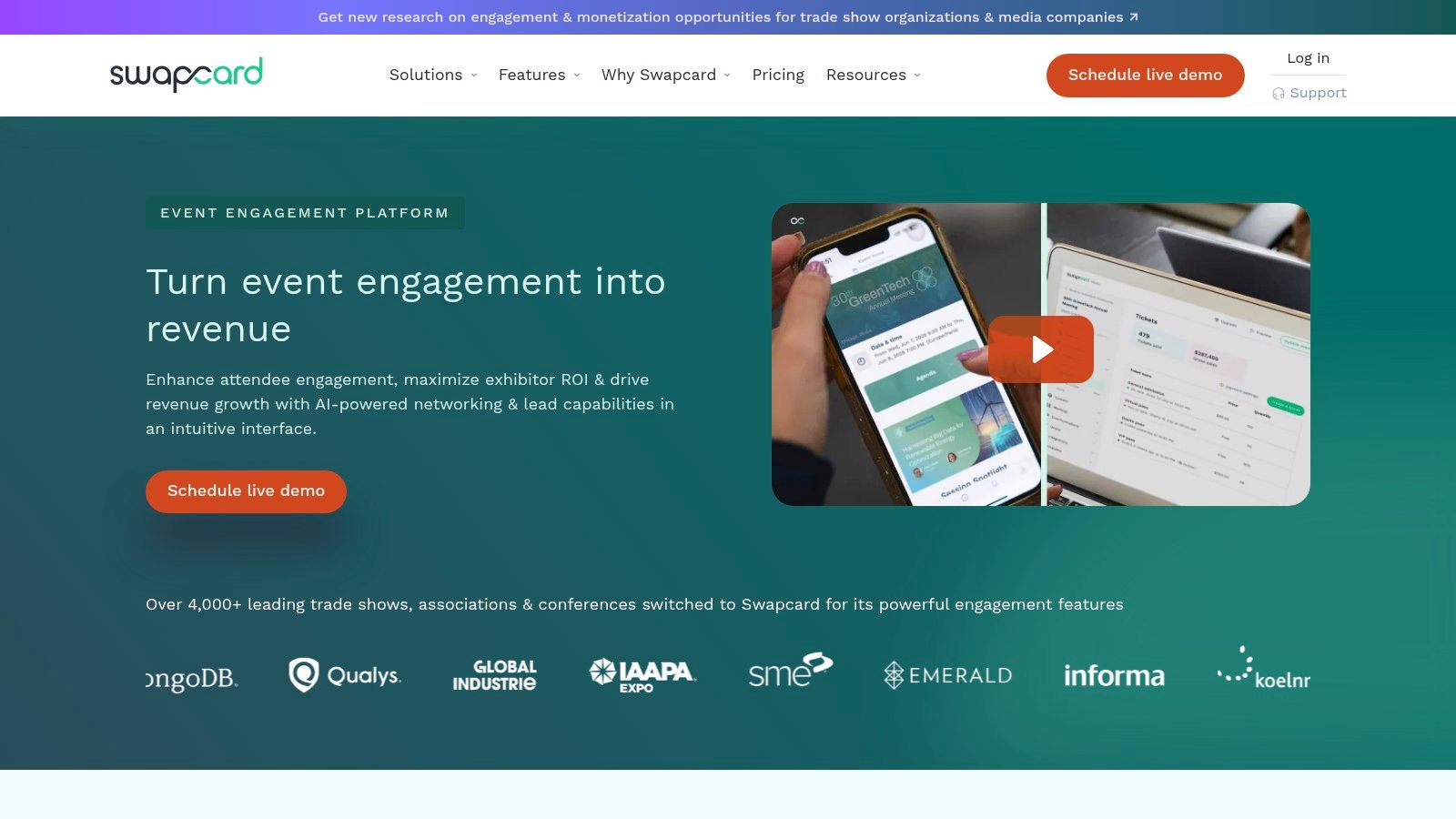
Swapcard’s core strength is its AI matchmaking, which intelligently connects attendees with similar interests, creating networking opportunities that feel organic, not forced. The platform supports this with integrated tools like private chats, interactive roundtables, and a robust content library for on-demand viewing, ensuring the community thrives long after the event ends.
Ideal For: Conference and trade show organizers prioritizing attendee networking, community building, and providing high value to exhibitors. Pricing: Offers published Starter and Professional pricing with unlimited events on an annual subscription basis. Enterprise plans are quote-based. Pro Tip: Encourage your speakers and exhibitors to pre-populate their profiles with detailed information. The more data the AI has, the more accurate and valuable its matchmaking recommendations will be for everyone involved.
Pros:
Powerful AI-driven matchmaking and networking features. Transparent subscription pricing for entry-level plans. Scales well from mid-sized conferences to large enterprise events.
Cons:
Starter plans have attendee and exhibitor caps, requiring upgrades for larger events. Billing is annual only, which may not suit planners organizing a single event.
Website:https://www.swapcard.com
Airmeet is the virtual event platform built for engagement, transforming standard webinars into vibrant, interactive experiences. It’s designed for organizers who believe an online event should be more than a one-way broadcast. For those who prioritize networking and audience participation, Airmeet offers a feature set that makes it a top contender among the best software for event planners focusing on virtual-first events.
Where other platforms bolt on networking as an afterthought, Airmeet makes it a core pillar. It provides dedicated virtual spaces like a “Social Lounge” with tables for group chats and a “Speed Networking” feature that pairs attendees for quick, timed conversations. This focus on creating genuine human connection in a digital space is what sets it apart, ensuring your attendees leave with new contacts, not just new information.
Airmeet excels at creating a community feel. The platform’s advanced analytics, branding options, and gamification features give organizers the tools to produce a polished and engaging event. Its multiple networking modes are specifically tailored to break the ice and facilitate meaningful interactions, mimicking the serendipitous encounters of an in-person conference.
Ideal For: Corporate marketers, community builders, and educators hosting virtual or hybrid events where attendee networking is a primary goal. Pricing: Offers transparent attendee-based pricing, including a pay-as-you-go Flex plan for one-off events and an annual Starter plan for recurring programs. Pro Tip: Actively promote the Social Lounge and Speed Networking features before and during your event. Guiding attendees to these spaces significantly boosts engagement and overall event satisfaction.
Pros:
Transparent entry pricing, including a one-time Flex option. Multiple networking modes (Social Lounge, Speed Networking) to boost engagement. Unlimited session duration on paid plans.
Cons:
Best suited for webinar/virtual-first programs; onsite needs require third-party solutions. Overages apply if live attendee counts exceed your plan's limits.
Website:https://www.airmeet.com
vFairs is the white-glove service of the event tech world, an all-in-one platform for virtual, hybrid, and in-person events that shines brightest when you need a dedicated partner. It’s built for planners who want less DIY stress and more done-for-you success, especially for complex virtual job fairs, trade shows, and immersive hybrid conferences. Think of it as having an expert technical team in your corner for every step.
The platform excels at creating visually rich 3D virtual environments that mimic real-life venues, keeping online attendees engaged. For hybrid or in-person events, vFairs provides a full suite of onsite tools, including badge printing and check-in apps, often with their own staff to ensure a seamless experience. This high-touch support model makes it one of the best software for event planners who value service as much as software.
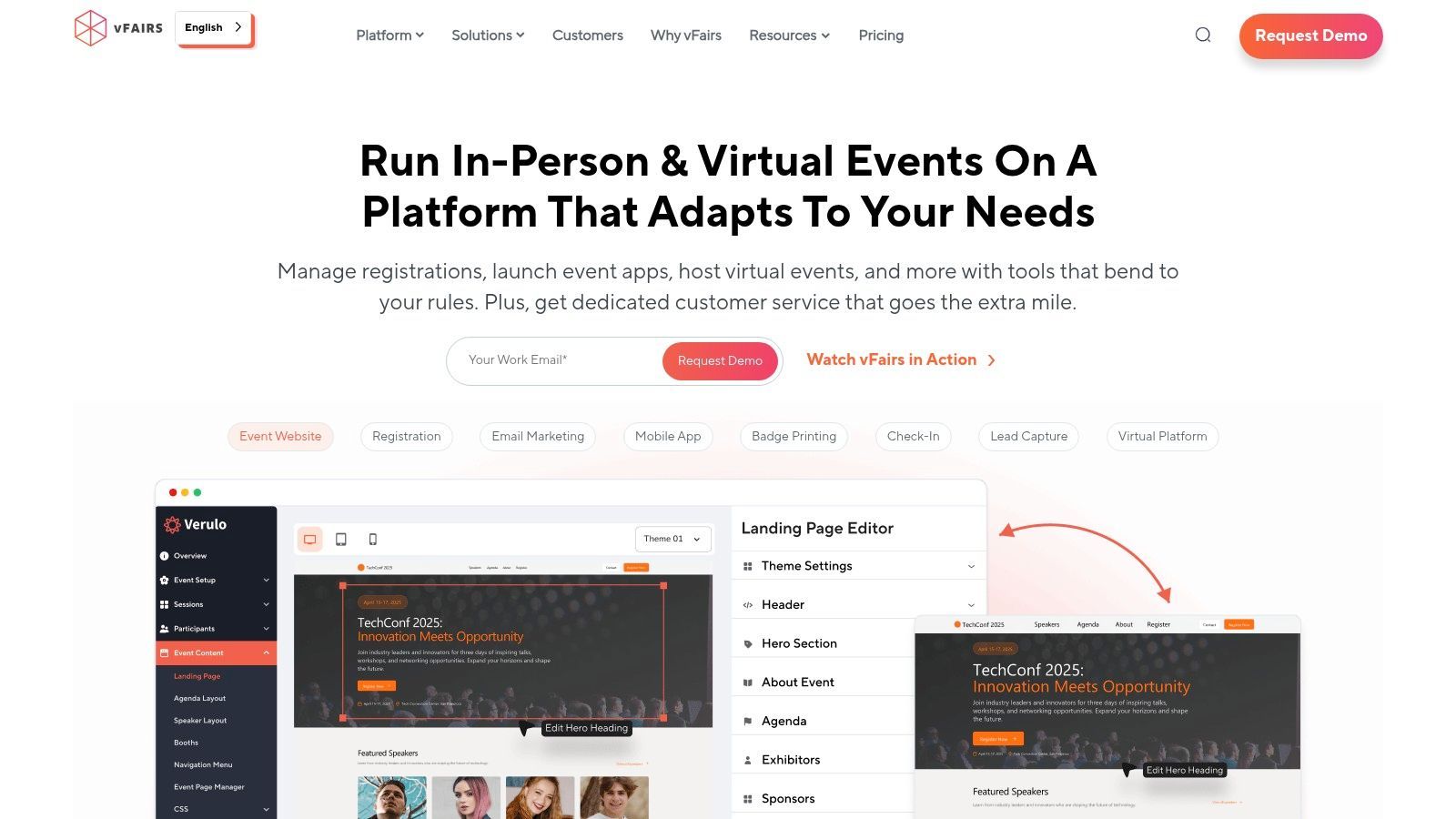
What truly sets vFairs apart is the dedicated project manager assigned to you. This expert guides you through setup, execution, and post-event analysis, a massive value-add for teams without deep technical expertise. Their versatility is also a key strength, easily adapting to university open days, corporate expos, and large-scale conferences with features like customizable registration, marketing tools, and robust mobile apps.
Ideal For: Organizations needing strong support for complex virtual/hybrid job fairs, trade shows, and conferences.Pricing: Pricing is custom and quote-based only, reflecting its service-heavy model. There is no free plan available.Pro Tip: Fully utilize your dedicated project manager. They are your best resource for customizing the platform and brainstorming unique engagement features, which can even include corporate event entertainment ideas.
Pros:
White-glove support with a dedicated project manager is included. Highly versatile for job fairs, expos, conferences, and community events. Strong feature set for virtual, hybrid, and in-person formats.
Cons:
Custom-only pricing and no free plan make it less accessible for small budgets. The service-heavy model might be overkill for simple, straightforward events.
Website:https://www.vfairs.com
RingCentral Events, the platform that rose from the ashes of the virtual event titan Hopin, has pivoted to solve a major headache for planners: unpredictable costs. By shifting to a per-organizer pricing model, it removes the anxiety of registration caps, making it one of the best software for event planners focused on scalable growth without scalable bills. It’s designed for organizations that want to run unlimited events without constantly checking their attendee count against their subscription tier.
This platform integrates seamlessly into the broader RingCentral communications ecosystem, making it a natural choice for companies already using their products for webinars or team messaging. It’s a unified solution for hybrid, virtual, and in-person events that prioritizes predictable budgeting and a consistent user experience across all communication channels, from initial registration to post-event follow-up.
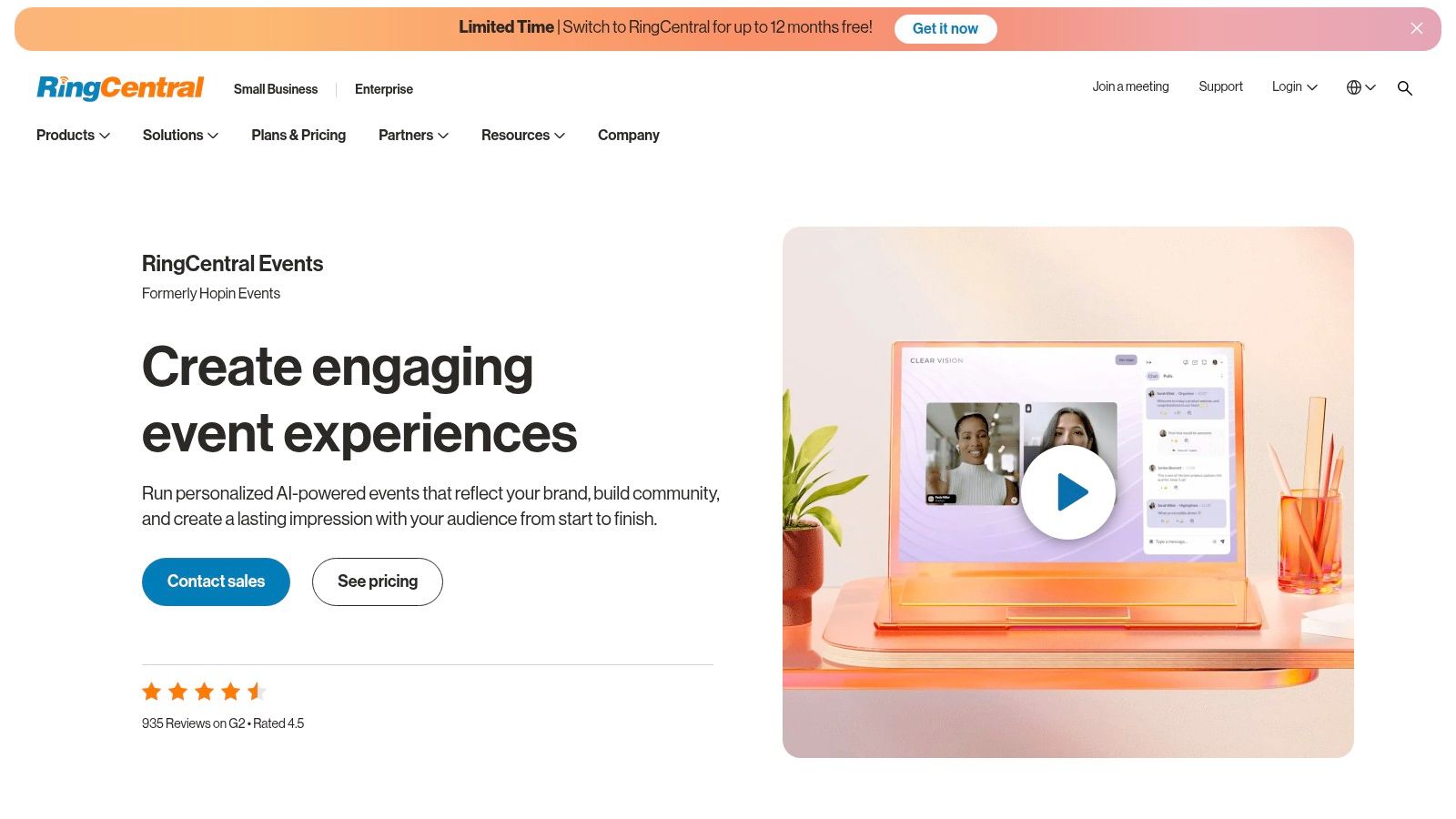
The standout feature is its pay-per-organizer model, which offers unlimited events and registrations across all its paid tiers. This empowers teams to experiment and scale their event strategy without fear of overage charges. With 40+ integrations and onsite features like check-in and badging on higher tiers, it capably handles the logistics for a wide variety of event formats.
Ideal For: Companies already invested in the RingCentral suite, and planners who prioritize predictable, seat-based pricing over per-attendee models. Pricing: Pro, Pro+, and Enterprise tiers are priced per organizer seat. A 30-day free trial is available to test the platform. Pro Tip: Pay close attention during the sales process to ensure you are being quoted on the new organizer-based model, as some legacy marketing materials may still reference the old, attendee-based pricing structure.
Pros:
Transparent, predictable pricing model with no attendee caps. Strong integration with the wider RingCentral communications stack. Supports virtual, hybrid, and in-person event formats.
Cons:
Some legacy documentation may still reference old pricing, causing potential confusion. Final pricing is quote-based and varies by the number of organizer seats and selected tier.
Website:https://www.ringcentral.com/rc-events.html
| Product | Core focus & features | UX & quality | Value & pricing | Target audience | Unique selling point |
|---|---|---|---|---|---|
| 🏆 SendFame | AI multi‑modal studio: music gen, celeb‑style videos, image→video, one‑click production | ★★★★☆ fast, intuitive | 💰 Mid; frequent promos (e.g., 56% off) | 👥 Marketers, creators, event planners, gift givers | ✨ Songs + videos + hyper‑real celebrity personalization |
| Cvent | Full‑stack event mgmt: registration, onsite, diagramming, analytics | ★★★★★ enterprise‑grade | 💰 High (sales‑quoted) | 👥 Enterprises & associations | ✨ Deep functionality + 24/7 support |
| Eventbrite | Self‑serve ticketing, marketplace, payments, check‑in | ★★★★☆ simple, broad reach | 💰 Per‑ticket fees; free events possible | 👥 Public events, festivals, classes | ✨ Massive consumer marketplace |
| Bizzabo | Event experience OS: registration, marketing, mobile app, wearables | ★★★★ strong onsite engagement | 💰 Mid–High (tiered pricing) | 👥 Mid‑market & enterprise conferences | ✨ Klik SmartBadges & sponsor ROI tools |
| Whova | Reg + event website + mobile app + networking | ★★★★ user‑friendly, reliable support | 💰 Quote‑based; SMB pricing | 👥 Associations & SMB conferences | ✨ Attendee networking focus |
| Stova | Enterprise stack: registration, agenda, onsite hardware (BadgeNext) | ★★★★ flexible onsite workflows | 💰 Sales‑quoted (enterprise) | 👥 Teams needing onsite hardware flexibility | ✨ Modular onsite hardware & integrations |
| Splash | Branded pages, templates, CRM & marketing integrations | ★★★★ marketing‑first UX | 💰 Quote‑based for Pro/Enterprise | 👥 Marketing teams & brand events | ✨ Design system for brand consistency |
| Zoho Backstage | Reg/ticketing (0% commission), webcasting, native Zoho apps | ★★★★ solid value & integration | 💰 Free tier + transparent plans; 0% fees | 👥 SMBs using Zoho ecosystem | ✨ 0% ticket commission & Zoho integrations |
| Swapcard | AI matchmaking, exhibitor tools, apps & integrations | ★★★★ smart networking | 💰 Published starter & pro subscriptions | 👥 Conferences & trade shows | ✨ AI‑powered matchmaking & exhibitor focus |
| Airmeet | Virtual/hybrid webinars with Social Lounge & Speed Networking | ★★★★ virtual engagement focused | 💰 Transparent entry pricing; Flex pay‑as‑you‑go | 👥 Virtual‑first events & webinars | ✨ Multiple networking formats |
| vFairs | Custom virtual/hybrid builds, onsite support, PM included | ★★★★ white‑glove service | 💰 Custom pricing (no free plan) | 👥 Complex virtual/hybrid events needing support | ✨ Concierge builds + dedicated PM |
| RingCentral Events | Virtual/hybrid/onsite with per‑organizer pricing & integrations | ★★★★ predictable & integrated | 💰 Organizer‑seat pricing; trial available | 👥 Orgs wanting predictable pricing + comms stack | ✨ Integrates with RingCentral comms suite |
And there you have it, a whirlwind tour of the digital command centers that power today’s most memorable events. We’ve navigated the all-in-one empires of Cvent and Bizzabo, explored the community-building genius of Whova, and peeked into the virtual extravaganzas powered by vFairs. From the sleek, design-forward registration pages of Splash to the integrated business ecosystem of Zoho Backstage, one thing is crystal clear: the era of juggling a dozen spreadsheets and a prayer is officially over. Choosing the best software for event planners isn't about finding a single "perfect" platform; it's about finding the perfect co-pilot for your specific journey.
The right tool acts as your tireless assistant, your data analyst, and your marketing guru all rolled into one. It’s what empowers a solo planner to execute a conference for thousands and what enables a corporate team to pivot from an in-person gala to a global hybrid summit without missing a beat. The key is to stop thinking of these platforms as mere expenses and start seeing them as strategic investments in efficiency, engagement, and, ultimately, event success.
Feeling a bit of decision paralysis after that deep dive? That’s completely normal. The sheer volume of features can feel overwhelming, but your next steps are simpler than you think. Let's distill this mountain of information into a clear, actionable plan to help you select your ideal event planning partner.
Your first move is to revisit your "must-haves" versus your "nice-to-haves" from the buyer's checklist we outlined earlier.
For Corporate Titans: If you're managing a complex portfolio of large-scale, multi-track conferences, your shortlist should be laser-focused on robust, end-to-end solutions. Heavy-hitters like Cvent, Stova, and Bizzabo offer the deep analytics, enterprise-level security, and complex registration logic you absolutely need. For the Engagement-Obsessed: If your primary goal is fostering a vibrant community and maximizing attendee networking, prioritize platforms like Whova and Swapcard. Their strengths in mobile app engagement, matchmaking, and interactive features will deliver the connected experience you're craving. For Budget-Conscious Innovators: If you need powerful functionality without the enterprise price tag, platforms like Zoho Backstage and Airmeet offer incredible value. They provide a surprising depth of features that can help you run professional, polished events while keeping your budget intact. For the Marketing Mavericks: If your event's success hinges on creating buzz and a seamless brand experience, look no further than Splash. And for a truly unique promotional hook, integrating a tool like SendFame to deliver personalized celebrity video invites can generate excitement that no standard email campaign can match.
Once you’ve narrowed it down to two or three top contenders, it's demo time. Don't just watch a canned presentation. Come prepared with a list of specific scenarios and pain points from your past events. Ask them to show you exactly how their platform would solve those problems. This is also your chance to get a feel for their customer support, which is just as critical as any feature.
Finally, remember that implementing a new system is about more than just technology; it’s about process. As you prepare to pitch your chosen software to stakeholders, you’ll need to present a clear, compelling case. A powerful proposal is not just about listing features; it’s about telling a story of transformation. To make your case effectively, it's crucial to understand what makes a good presentation. Nailing this part ensures you get the buy-in needed to bring your new, streamlined vision for event management to life.
Your next event doesn't start on opening day. It starts right now, with the decision you make to equip yourself with the right tools. The perfect software is out there, waiting to automate the mundane, amplify your creativity, and help you craft an experience that people will be talking about for years to come.
Ready to create unforgettable hype for your next event? While these platforms manage the logistics, SendFame helps you capture your audience’s attention from the very beginning. Imagine sending personalized video invitations from celebrities to your VIPs or using influencer shoutouts to drive ticket sales. Visit SendFame to see how you can add a touch of star power and make your event the most talked-about ticket in town.
Create Epic

SendFame

Create Epic with SendFame!
Questions: info@sendfame.com